
Author: Ano Sensei
Format: Essay
Subject Matter: education of the emotions, emotion recollected in tranquillity, John Stuart Mill, poetry memorisation, poetry pedagogy, Romantic Poetry, spontaneous overflow of powerful feelings, The Tables Turned, utilitarianism, William Wordsworth
Related content:
- • Wordsworth: Tintern Abbey – Reading & Analysis (Playlist) (Video Playlist)
- • Wordsworth: Tintern Abbey – Illustrated Reading (Video)
- • Wordsworth: Tintern Abbey – Concise Analysis (Video)
- • Wordsworth: Tintern Abbey – Abridged Reading (Video)
- • Wordsworth: Tintern Abbey – Analysis (Video)
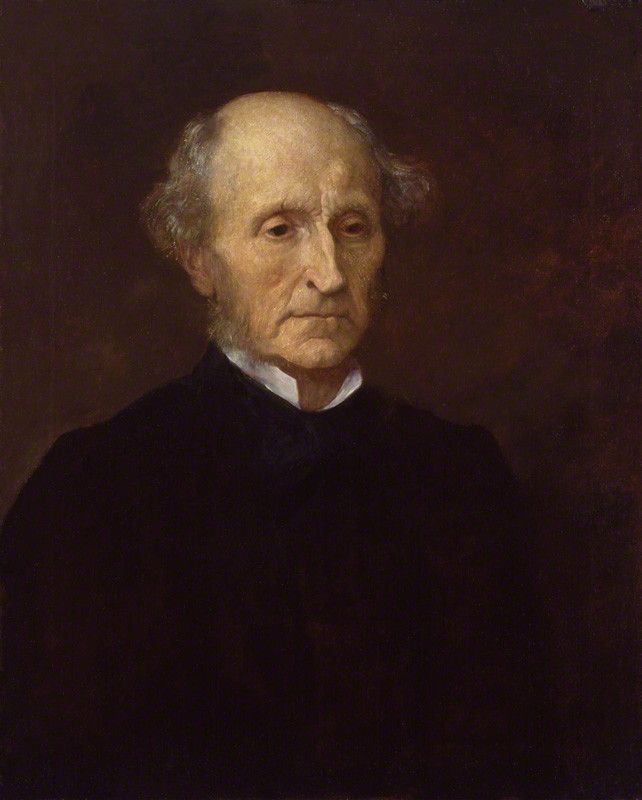
The young John Stuart Mill
During the winter of 1826-7, at the age of 20, the philosopher and political economist John Stuart Mill entered into a period of severe depression. He’d had the double blessing of an extraordinarily sharp mind and a highly rigorous education, and yet here he was, at the outset of his adult life, broken and disillusioned.
John’s father, James Mill, was a close friend of the philosopher and social reformer Jeremy Bentham. Together, they developed utilitarianism, a moral theory based on the idea of “the greatest good for the greatest number”, promoting free speech, freedom of the press, religious toleration, legal and prison reform, and total democracy, including widening the vote to dismantle the power of the monarch and the landed gentry. Between them, they raised John to carry the torch for their reformist agenda when they died.
Their plans seemed to work for a while. In John’s words:
And then, one autumn day, some five years after first reading Bentham, he woke up to the realisation that something was missing. He compared himself, wittily, to “converts to Methodism … when smitten by their first ‘conviction of sin’". That is to say, he felt like someone whose life has fallen apart and can only be redeemed by turning to God.
He wasn’t a religious man, though, and it wasn’t a sense of sin that overwhelmed him. He had been raised on rational principles, and it was the lack of an emotional life that had torn him apart. Today, we might call it an existential crisis, but in those days they didn’t have that concept, and the Methodist analogy was the closest he could get to expressing what he was going through.
He couldn’t bring himself to tell his father, and there was no one else he could turn to. For months, he kept up an outward pretence, while falling to pieces inside, convinced that his strict upbringing had left him incapable of feeling normal human emotions.
In despair, he turned to poetry … which made things worse!
Then, one day, he happened to read an autobiography (Jean-François Marmontel’s Mémoires d'un Père, 1804) in which the author writes about how he became his own man after the death of his father. The young John Stuart Mill was deeply moved by it:
No doubt Marmontel’s work sparked his feelings about his own father, perhaps even at the Oedipal level. At any rate, his mental health began to improve at this point, and, in the autumn of 1828, he turned to poetry again.
This time, rather than Byron, he opened a volume of poems by William Wordsworth, poems he later described as “a medicine for my state of mind”. Explaining what drew him to Wordsworth’s poems, he wrote:
It’s not that, in his view, Wordsworth was a particularly great poet. His verdict – which I agree with – was that “There have certainly been … greater poets than Wordsworth”. But it was through reading Wordsworth that he came to feel that “there was real, permanent happiness in tranquil contemplation”, from Wordsworth that he learned the significance of “the common feelings and common destiny of human beings”:
Why poetry?
There’s a lot to unpack here. Mill isn’t just saying poetry did him good in a generic eat-up-your-veggies kind of way. It’s more precise than that. Byron’s poetry actually made things worse, the way, perhaps, doomscrolling or sitting in a dark room playing a breakup playlist on repeat might. Wordsworth, though, was something else, leading him out of the feedback loop of despair, rather than simply wallowing in it.
Not all poetry will speak to everyone in the same way. We meet it from where we are, and we are all in different places, on our own unique path through the commonality of human experience. What moves one person may leave another cold. What leaves you cold now may come to have deep meaning and value at another time in your life.
What strikes me most, though, is that Wordsworth didn’t just resonate with Mill. He didn’t just match Mill’s mood. He gave him a way to articulate to himself feelings he didn’t know he had, to explore and develop an inner world of emotions, comparable to, and in parallel with, the world of logic and reason he had been educated in so thoroughly all his life.
This is where poetry comes into its own. At its best, it goes beyond merely arousing our emotions. It leads us to focus on our feelings in a way we perhaps have never done before. Most importantly of all, perhaps, it removes us from the goal-driven preoccupations of our everyday life and allows us time for dispassionate reflection. All the tensions, the contradictions of the human condition, are there in poetry, but we don’t have to do anything about them.
Ironically, it is at this critical stage that the teaching of poetry so often fails. Precisely where we should be allowing the magic to do its work, we impose, as Wordsworth puts it, “Our meddling intellect” and “murder to dissect” (“The Tables Turned”). Rather than experiencing anything at all, students are encouraged to reduce the poem in front of them to a checklist of things to say in their upcoming test (“Oh, yeah, Wordsworth. Oh yeah, ‘the spontaneous overflow of powerful feelings’”. “Oh yeah, Wordsworth. Oh yeah, ‘emotion recollected in tranquility’”). Not their fault; the examiners give five points each for quotes like that.
But it doesn’t have to be that way. It wasn’t that way for John Stuart Mill and it doesn’t have to be that way for us. You might disagree. You might say, “He wasn’t mugging up Wordsworth or Byron for a test. We are.” And you’d be right. But what if said you can have your cake and eat it? What if I said there’s a way to get everything you need to ace your test and get something out of it that you will treasure for life. What’s not to like about that?!
Poetry exists to give us pleasure. As William Carlos Williams famously said, “If it ain’t a pleasure, it ain’t a poem”, and the greatest pleasure comes from making the poem truly our own. We can do that by internalising it, and the surest way to internalise it is to remember that poetry is, essentially, a performative art. The most efficient way to internalise poetry is by memorising it, and, ultimately, reciting it.
Two of the biggest progressive approaches to poetry in the classroom – Poetry Out Loudin the US and Poetry By Heart in the UK – have hit on precisely this approach. They lead students on a journey from choosing a poem to memorising and reciting it, and all the analytical stuff comes up naturally in the course of that journey.
This is a completely different approach from the traditional classroom analysis of poetry, but, in the end, there’s no way we can effectively recite a poem unless we have grasped its structure – its rhythms, its sound patterns – and its emotional power. It’s a different – and much more effective – way of reaching the same goal, with a huge bonus; you get to carry that poem inside you for life.
And there’s more. Just as John Stuart Mill went on to reach even greater heights as a philosopher and social reformer once he had discovered the power of poetry to develop his emotions, so programmes like these report improvements in participants’ academic performance, in their willingness to engage in volunteer and community work, their discussion and debating skills, their ability to empathise with others, and so on. And this applies all across the board, not just to students of the humanities.
If this makes sense to you, the next step should be obvious. Choose a poem you think you’d like to work with – or write one yourself if you prefer! – memorise it and recite it. That will involve making decisions – how much weight to give the rhymes, how pace the rhythm, and so on – so the analytic side of the process will take its place naturally alongside the memorisation and reciting.
I’ve built a free tool that will make this easier. It will help you to memorise the poem, and allow you to record yourself reciting it. If you’d like feedback on your recording, you can ask for it and I’ll give it to you.
Try the Memorisation Tool — Free