Author: Ano Sensei
Format: Video Playlist
Structure: Iambic pentameter, Ode stanza
Keats, "Ode to a Nightingale" - complete reading, in-depth analysis, focus on meaning and technique
This version has been rerecorded from scratch, giving better sound quality, with additional illustrations ...and commentary.
0:00 Introduction
0:10 A balance of opposites
0:32 Stanza 1: Reading
1:08 Stanza 1: Analysis
3:20 Stanzas 2 & 3: Reading
4:32 Stanzas 2& 3: Analysis
7:20 Stanza 4: Introduction
7:37 Stanza 4: Reading
8:10 Stanza 4: Analysis
9:18 Stanza 5: Introduction
9:33 Stanza 5: Reading
10:08 Stanza 5: Analysis
11:17 Stanza 6: Introduction
11:37 Stanza 6: Reading
12:11 Stanza 6: Analysis
13:01 Review of stanzas 1-6
13:28 Stanza 7: Reading
14:04 Stanza 7: Analysis
14:35 Stanza 8: Reading
15:19 Stanza 8: Analysis
15:38 Conclusion
For an illustrated reading of this poem, click here: https://youtu.be/Q6G8ro-wE5c
Ano sensei is the go-to channel for poetry analysis! For more Keats videos, take a look at the ode "To Autumn": https://www.youtube.com/watch?v=Fx0qtVgOqBg - and don't miss "Ode to a Grecian Urn": https://youtu.be/QOmQNP26Lak.
0:00 Intro
0:18 A balance of opposites
0:45 Stanza 1: The poet and the nightingale contrasted
2:43 Stanzas 2 & 3: The world of the nightingale contrasted with the world of the poet
5:47 Stanza 4: Escape from reality
7:50 Stanzas 5 & 6: The world of the imagination
10:27 Stanza 7: The inevitability of suffering
12:26 Stanza 8: Resolution; the poem ends in a state of confusion
This is an analysis of Keats's "Ode to a Nightingale" from the point of view of contrasting elements within the poem. Subscribe to the Ano sensei channel for more analyses like this one - Keats's "Ode on a Grecian Urn", Shelley's "Ode to the West Wind", etc. Or follow the poetry playlist: https://tinyurl.com/anopoetry
© All rights reserved
==============================================
My heart aches, and a drowsy numbness pains
My sense, as though of hemlock I had drunk,
Or emptied some dull opiate to the drains
One minute past, and Lethe-wards had sunk:
'Tis not through envy of thy happy lot,
But being too happy in thine happiness,—
That thou, light-winged Dryad of the trees
In some melodious plot
Of beechen green, and shadows numberless,
Singest of summer in full-throated ease...Show More

Now Playing
Keats, "Ode to a Nightingale" - complete reading, in-depth analysis, focus on meaning and technique
This is an updated and improved version of my original analysis, which ...
This is an updated and improved version of my original analysis, which you can find here: https://youtu.be/tYCjCUoHlv8
This version has been rerecorded from scratch, giving better sound quality, with additional illustrations ...and commentary.
0:00 Introduction
0:10 A balance of opposites
0:32 Stanza 1: Reading
1:08 Stanza 1: Analysis
3:20 Stanzas 2 & 3: Reading
4:32 Stanzas 2& 3: Analysis
7:20 Stanza 4: Introduction
7:37 Stanza 4: Reading
8:10 Stanza 4: Analysis
9:18 Stanza 5: Introduction
9:33 Stanza 5: Reading
10:08 Stanza 5: Analysis
11:17 Stanza 6: Introduction
11:37 Stanza 6: Reading
12:11 Stanza 6: Analysis
13:01 Review of stanzas 1-6
13:28 Stanza 7: Reading
14:04 Stanza 7: Analysis
14:35 Stanza 8: Reading
15:19 Stanza 8: Analysis
15:38 Conclusion
For an illustrated reading of this poem, click here: https://youtu.be/Q6G8ro-wE5c
Ano sensei is the go-to channel for poetry analysis! For more Keats videos, take a look at the ode "To Autumn": https://www.youtube.com/watch?v=Fx0qtVgOqBg - and don't miss "Ode to a Grecian Urn": https://youtu.be/QOmQNP26Lak.
0:00 Intro
0:18 A balance of opposites
0:45 Stanza 1: The poet and the nightingale contrasted
2:43 Stanzas 2 & 3: The world of the nightingale contrasted with the world of the poet
5:47 Stanza 4: Escape from reality
7:50 Stanzas 5 & 6: The world of the imagination
10:27 Stanza 7: The inevitability of suffering
12:26 Stanza 8: Resolution; the poem ends in a state of confusion
This is an analysis of Keats's "Ode to a Nightingale" from the point of view of contrasting elements within the poem. Subscribe to the Ano sensei channel for more analyses like this one - Keats's "Ode on a Grecian Urn", Shelley's "Ode to the West Wind", etc. Or follow the poetry playlist: https://tinyurl.com/anopoetry
© All rights reserved
==============================================
My heart aches, and a drowsy numbness pains
My sense, as though of hemlock I had drunk,
Or emptied some dull opiate to the drains
One minute past, and Lethe-wards had sunk:
'Tis not through envy of thy happy lot,
But being too happy in thine happiness,—
That thou, light-winged Dryad of the trees
In some melodious plot
Of beechen green, and shadows numberless,
Singest of summer in full-throated ease...Show More
This version has been rerecorded from scratch, giving better sound quality, with additional illustrations ...and commentary.
0:00 Introduction
0:10 A balance of opposites
0:32 Stanza 1: Reading
1:08 Stanza 1: Analysis
3:20 Stanzas 2 & 3: Reading
4:32 Stanzas 2& 3: Analysis
7:20 Stanza 4: Introduction
7:37 Stanza 4: Reading
8:10 Stanza 4: Analysis
9:18 Stanza 5: Introduction
9:33 Stanza 5: Reading
10:08 Stanza 5: Analysis
11:17 Stanza 6: Introduction
11:37 Stanza 6: Reading
12:11 Stanza 6: Analysis
13:01 Review of stanzas 1-6
13:28 Stanza 7: Reading
14:04 Stanza 7: Analysis
14:35 Stanza 8: Reading
15:19 Stanza 8: Analysis
15:38 Conclusion
For an illustrated reading of this poem, click here: https://youtu.be/Q6G8ro-wE5c
Ano sensei is the go-to channel for poetry analysis! For more Keats videos, take a look at the ode "To Autumn": https://www.youtube.com/watch?v=Fx0qtVgOqBg - and don't miss "Ode to a Grecian Urn": https://youtu.be/QOmQNP26Lak.
0:00 Intro
0:18 A balance of opposites
0:45 Stanza 1: The poet and the nightingale contrasted
2:43 Stanzas 2 & 3: The world of the nightingale contrasted with the world of the poet
5:47 Stanza 4: Escape from reality
7:50 Stanzas 5 & 6: The world of the imagination
10:27 Stanza 7: The inevitability of suffering
12:26 Stanza 8: Resolution; the poem ends in a state of confusion
This is an analysis of Keats's "Ode to a Nightingale" from the point of view of contrasting elements within the poem. Subscribe to the Ano sensei channel for more analyses like this one - Keats's "Ode on a Grecian Urn", Shelley's "Ode to the West Wind", etc. Or follow the poetry playlist: https://tinyurl.com/anopoetry
© All rights reserved
==============================================
My heart aches, and a drowsy numbness pains
My sense, as though of hemlock I had drunk,
Or emptied some dull opiate to the drains
One minute past, and Lethe-wards had sunk:
'Tis not through envy of thy happy lot,
But being too happy in thine happiness,—
That thou, light-winged Dryad of the trees
In some melodious plot
Of beechen green, and shadows numberless,
Singest of summer in full-throated ease...Show More

Now Playing
John Keats's ode "To Autumn": analysis, background and overview.
An analysis of John Keats's "To Autumn", a poem he wrote fifteen ...
An analysis of John Keats's "To Autumn", a poem he wrote fifteen months before his death at the age of twenty-five. Critics tend to emphasise the warmth and positivity of ...this poem but, despite its beautiful depiction of autumn, it does have a dark side. The beauty of autumn is inseparable from its transience, and the poem's power comes from the shadow of winter and death that falls across every stanza.
For Keats himself, walking the countryside with thoughts of his approaching death and his love for Fanny Brawne, whom he was too poor to marry, "To Autumn" was a brief oasis in a broadly hostile landscape.
For some sixty years now, this poem has been lurking in the corner of my mind each time the nights grow longer and the days grow colder and gathering swallows twitter in the skies.
Topics covered: alliteration and sound patterning | personification of autumn | the harvest and death imagery | paralepsis | biographical and political background | the Peterloo Massacre
Please check the playlist for the different viewing options for this video: https://www.youtube.com/playlist?list=PLzVb6yL_jY6_UMFaLJrp1yw6NH0DQB5zy
0:00 Introduction
0:12 Analysis
0:30 Alliteration
01:07 Semantic connections
2:45 The human element
3:02 Fruition and ripeness
3:31 Overripeness
4:17 Contamination of an ideal world
5:00 The first and second stanzas contrasted
5:26 Autumn and harvest
5:52 Autumn personified
6:43 Autumn and the poor
7:09 Autumn and death
7:34 Alliteration
7:46 A comfortable atmosphere
8:16 A less comfortable atmosphere
8:48 The patience of autumn
9:30 The music of autumn
9:40 Paralepsis and the songs of spring
10:07 Wailing, mourning, bleating and twittering
10:40 Comparison of the music of spring and autumn
11:02 Positive and negative elements
11:39 Melancholy wistfulness
11:56 Critical responses
12:32 Background and context
12:46 Thoughts of love and death
13:12 The political landscape
13:45 Hope and doom
If subtitles / captions are not available in your language, let me know and I will add them.
#romanticpoetry #keats #naturepoem #naturepoetry #nature #poetry #poetrylovers #autumn
© All rights reserved.Show More
For Keats himself, walking the countryside with thoughts of his approaching death and his love for Fanny Brawne, whom he was too poor to marry, "To Autumn" was a brief oasis in a broadly hostile landscape.
For some sixty years now, this poem has been lurking in the corner of my mind each time the nights grow longer and the days grow colder and gathering swallows twitter in the skies.
Topics covered: alliteration and sound patterning | personification of autumn | the harvest and death imagery | paralepsis | biographical and political background | the Peterloo Massacre
Please check the playlist for the different viewing options for this video: https://www.youtube.com/playlist?list=PLzVb6yL_jY6_UMFaLJrp1yw6NH0DQB5zy
0:00 Introduction
0:12 Analysis
0:30 Alliteration
01:07 Semantic connections
2:45 The human element
3:02 Fruition and ripeness
3:31 Overripeness
4:17 Contamination of an ideal world
5:00 The first and second stanzas contrasted
5:26 Autumn and harvest
5:52 Autumn personified
6:43 Autumn and the poor
7:09 Autumn and death
7:34 Alliteration
7:46 A comfortable atmosphere
8:16 A less comfortable atmosphere
8:48 The patience of autumn
9:30 The music of autumn
9:40 Paralepsis and the songs of spring
10:07 Wailing, mourning, bleating and twittering
10:40 Comparison of the music of spring and autumn
11:02 Positive and negative elements
11:39 Melancholy wistfulness
11:56 Critical responses
12:32 Background and context
12:46 Thoughts of love and death
13:12 The political landscape
13:45 Hope and doom
If subtitles / captions are not available in your language, let me know and I will add them.
#romanticpoetry #keats #naturepoem #naturepoetry #nature #poetry #poetrylovers #autumn
© All rights reserved.Show More

Now Playing
Keats "To Autumn" — Reading and analysis: ripeness, harvest and death
A complete close reading and analysis of John Keats's "To Autumn", a ...
A complete close reading and analysis of John Keats's "To Autumn", a poem written fifteen months before his death at the age of twenty-five. Critics tend to emphasise the warmth ...and positivity of this poem but, despite its beautiful depiction of autumn, it does have a dark side. The beauty of autumn is inseparable from its transience, and the poem's power comes from the shadow of winter and death that falls across every stanza.
For Keats himself, walking the countryside with thoughts of his approaching death and his love for Fanny Brawne, whom he was too poor to marry, "To Autumn" was a brief oasis in a broadly hostile landscape.
For some sixty years now, this poem has been lurking in the corner of my mind each time the nights grow longer and the days grow colder and gathering swallows twitter in the skies.
Topics covered: alliteration and sound patterning | personification of autumn | the harvest and death imagery | paralepsis | biographical and political background | the Peterloo Massacre
0:00 Introduction
0:10 First stanza: a reading
0:50 Analysis
1:01 Alliteration
1:46 Semantic connections
3:24 The human element
3:42 Fruition and ripeness
4:02 Overripeness
4:56 Contamination of an ideal world
5:35 Second stanza: a reading
6:20 The first and second stanzas contrasted
6:45 Autumn and harvest
7:09 Autumn personified
8:00 Autumn and the poor
8:26 Autumn and death
8:51 Alliteration
9:01 A comfortable atmosphere
9:32 A less comfortable atmosphere
10:05 The patience of autumn
10:46 Third stanza: a reading
11:27 The music of autumn
11:37 Paralepsis and the songs of spring
12:08 Wailing, mourning, bleating and twittering
12:38 Comparison of the music of spring and autumn
13:00 Positive and negative elements
13:36 Melancholy wistfulness
13:48 Critical responses
14:29 Background and context
14:43 Thoughts of love and death
15:09 The political landscape
15:42 Hope and doom
If you just want an analysis of the poem, without the reading, click here: https://youtu.be/Fx0qtVgOqBg
If subtitles / captions are not available in your language, let me know and I will add them.
© All rights reserved.Show More
For Keats himself, walking the countryside with thoughts of his approaching death and his love for Fanny Brawne, whom he was too poor to marry, "To Autumn" was a brief oasis in a broadly hostile landscape.
For some sixty years now, this poem has been lurking in the corner of my mind each time the nights grow longer and the days grow colder and gathering swallows twitter in the skies.
Topics covered: alliteration and sound patterning | personification of autumn | the harvest and death imagery | paralepsis | biographical and political background | the Peterloo Massacre
0:00 Introduction
0:10 First stanza: a reading
0:50 Analysis
1:01 Alliteration
1:46 Semantic connections
3:24 The human element
3:42 Fruition and ripeness
4:02 Overripeness
4:56 Contamination of an ideal world
5:35 Second stanza: a reading
6:20 The first and second stanzas contrasted
6:45 Autumn and harvest
7:09 Autumn personified
8:00 Autumn and the poor
8:26 Autumn and death
8:51 Alliteration
9:01 A comfortable atmosphere
9:32 A less comfortable atmosphere
10:05 The patience of autumn
10:46 Third stanza: a reading
11:27 The music of autumn
11:37 Paralepsis and the songs of spring
12:08 Wailing, mourning, bleating and twittering
12:38 Comparison of the music of spring and autumn
13:00 Positive and negative elements
13:36 Melancholy wistfulness
13:48 Critical responses
14:29 Background and context
14:43 Thoughts of love and death
15:09 The political landscape
15:42 Hope and doom
If you just want an analysis of the poem, without the reading, click here: https://youtu.be/Fx0qtVgOqBg
If subtitles / captions are not available in your language, let me know and I will add them.
© All rights reserved.Show More

Now Playing
John Keats, "Ode on a Grecian Urn" - In-depth analysis, exploring the deeper meaning of the poem.
0:00 Introduction 0:13 First stanza: Textual analysis 1:52 First ...
0:00 Introduction
0:13 First stanza: Textual analysis
1:52 First stanza: Visualizing the poem
4:00 Second stanza: Textual analysis
6:42 The world of the imagination
7:02 Third stanza: Textual analysis
8:32 Context and comments: Suffering and escapism
9:37 ...Fourth stanza: Textual analysis
11:50 Suffering in the world of the urn
12:51 Fifth stanza: Textual analysis
14:44 Comments on the poem's conclusion
Check out my video on Keats's "Ode to a Nightingale" here: https://youtu.be/PoVy5zvRJHc.
Find my other videos on the Romantic poets here: https://tinyurl.com/anoromantics. Subscribe now!
Playlist: https://www.youtube.com/playlist?list=PLzVb6yL_jY69RMez733LUEYNI4-LgSjGh
Keats's "Ode on a Grecian urn" is one of the best-known poems of the Romantic period. Here I discuss it mainly from the point of view of its themes and imagery, along with some discussion of the poetic techniques. Check https://youtu.be/sbmiq_70dpg for my reading of this poem.
If you would like subtitles/captions in another language, please tell me and I will add them.
© All rights reserved
==============================================
Thou still unravish'd bride of quietness,
Thou foster-child of silence and slow time,
Sylvan historian, who canst thus express
A flowery tale more sweetly than our rhyme:
What leaf-fring'd legend haunts about thy shape
Of deities or mortals, or of both,
In Tempe or the dales of Arcady?
What men or gods are these? What maidens loth?
What mad pursuit? What struggle to escape?
What pipes and timbrels? What wild ecstasy?
Heard melodies are sweet, but those unheard
Are sweeter; therefore, ye soft pipes, play on;
Not to the sensual ear, but, more endear'd,
Pipe to the spirit ditties of no tone:
Fair youth, beneath the trees, thou canst not leave
Thy song, nor ever can those trees be bare;
Bold Lover, never, never canst thou kiss,
Though winning near the goal yet, do not grieve;
She cannot fade, though thou hast not thy bliss,
For ever wilt thou love, and she be fair!
Ah, happy, happy boughs! that cannot shed
Your leaves, nor ever bid the Spring adieu;
And, happy melodist, unwearied,
For ever piping songs for ever new;
More happy love! more happy, happy love!
For ever warm and still to be enjoy'd,
For ever panting, and for ever young;
All breathing human passion far above,
That leaves a heart high-sorrowful and cloy'd,
A burning forehead, and a parching tongue.
Who are these coming to the sacrifice?
To what green altar, O mysterious priest,
Lead'st thou that heifer lowing at the skies,
And all her silken flanks with garlands drest?
What little town by river or sea shore,
Or mountain-built with peaceful citadel,
Is emptied of this folk, this pious morn?
And, little town, thy streets for evermore
Will silent be; and not a soul to tell
Why thou art desolate, can e'er return.
O Attic shape! Fair attitude! with brede
Of marble men and maidens overwrought,
With forest branches and the trodden weed;
Thou, silent form, dost tease us out of thought
As doth eternity: Cold Pastoral!
When old age shall this generation waste,
Thou shalt remain, in midst of other woe
Than ours, a friend to man, to whom thou say'st,
"Beauty is truth, truth beauty,—that is all
Ye know on earth, and all ye need to know."Show More
0:13 First stanza: Textual analysis
1:52 First stanza: Visualizing the poem
4:00 Second stanza: Textual analysis
6:42 The world of the imagination
7:02 Third stanza: Textual analysis
8:32 Context and comments: Suffering and escapism
9:37 ...Fourth stanza: Textual analysis
11:50 Suffering in the world of the urn
12:51 Fifth stanza: Textual analysis
14:44 Comments on the poem's conclusion
Check out my video on Keats's "Ode to a Nightingale" here: https://youtu.be/PoVy5zvRJHc.
Find my other videos on the Romantic poets here: https://tinyurl.com/anoromantics. Subscribe now!
Playlist: https://www.youtube.com/playlist?list=PLzVb6yL_jY69RMez733LUEYNI4-LgSjGh
Keats's "Ode on a Grecian urn" is one of the best-known poems of the Romantic period. Here I discuss it mainly from the point of view of its themes and imagery, along with some discussion of the poetic techniques. Check https://youtu.be/sbmiq_70dpg for my reading of this poem.
If you would like subtitles/captions in another language, please tell me and I will add them.
© All rights reserved
==============================================
Thou still unravish'd bride of quietness,
Thou foster-child of silence and slow time,
Sylvan historian, who canst thus express
A flowery tale more sweetly than our rhyme:
What leaf-fring'd legend haunts about thy shape
Of deities or mortals, or of both,
In Tempe or the dales of Arcady?
What men or gods are these? What maidens loth?
What mad pursuit? What struggle to escape?
What pipes and timbrels? What wild ecstasy?
Heard melodies are sweet, but those unheard
Are sweeter; therefore, ye soft pipes, play on;
Not to the sensual ear, but, more endear'd,
Pipe to the spirit ditties of no tone:
Fair youth, beneath the trees, thou canst not leave
Thy song, nor ever can those trees be bare;
Bold Lover, never, never canst thou kiss,
Though winning near the goal yet, do not grieve;
She cannot fade, though thou hast not thy bliss,
For ever wilt thou love, and she be fair!
Ah, happy, happy boughs! that cannot shed
Your leaves, nor ever bid the Spring adieu;
And, happy melodist, unwearied,
For ever piping songs for ever new;
More happy love! more happy, happy love!
For ever warm and still to be enjoy'd,
For ever panting, and for ever young;
All breathing human passion far above,
That leaves a heart high-sorrowful and cloy'd,
A burning forehead, and a parching tongue.
Who are these coming to the sacrifice?
To what green altar, O mysterious priest,
Lead'st thou that heifer lowing at the skies,
And all her silken flanks with garlands drest?
What little town by river or sea shore,
Or mountain-built with peaceful citadel,
Is emptied of this folk, this pious morn?
And, little town, thy streets for evermore
Will silent be; and not a soul to tell
Why thou art desolate, can e'er return.
O Attic shape! Fair attitude! with brede
Of marble men and maidens overwrought,
With forest branches and the trodden weed;
Thou, silent form, dost tease us out of thought
As doth eternity: Cold Pastoral!
When old age shall this generation waste,
Thou shalt remain, in midst of other woe
Than ours, a friend to man, to whom thou say'st,
"Beauty is truth, truth beauty,—that is all
Ye know on earth, and all ye need to know."Show More

Now Playing
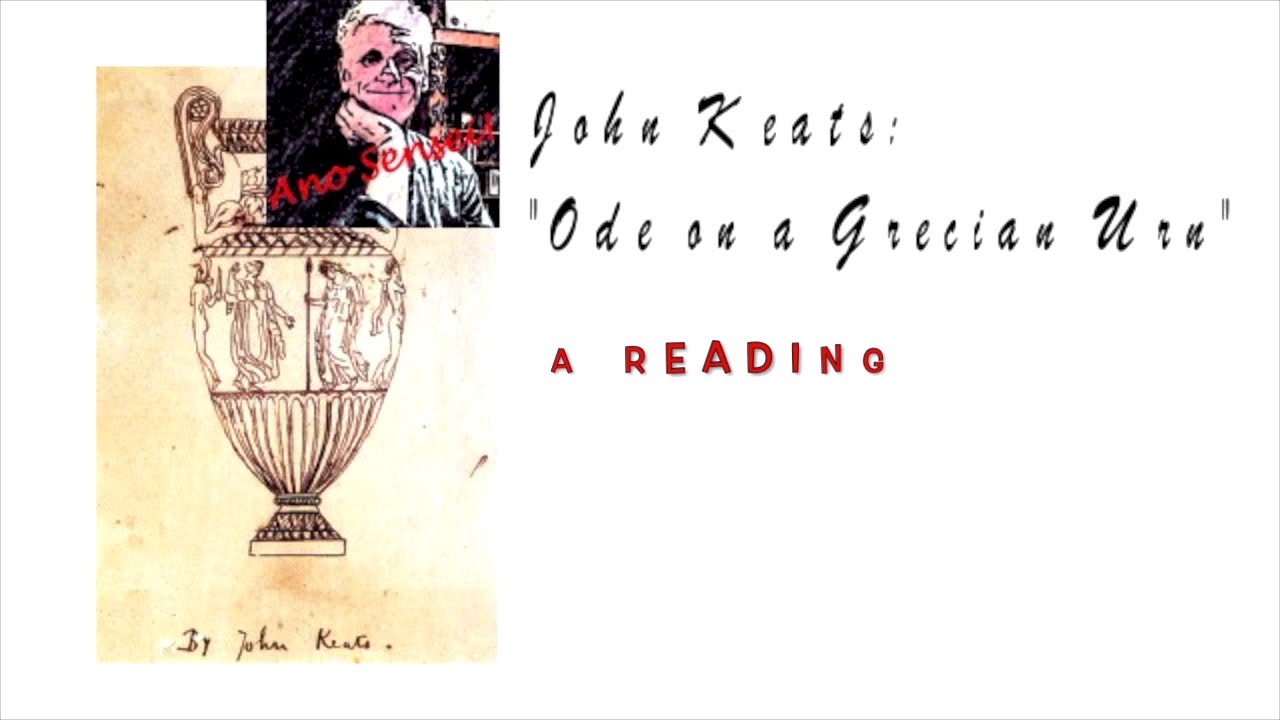
John Keats, "Ode on a Grecian urn": A reading
A reading of John Keats's "Ode on a Grecian urn". Check ...
A reading of John Keats's "Ode on a Grecian urn". Check https://youtu.be/QOmQNP26Lak for my analysis of this poem.
Playlist: https://www.youtube.com/playlist?list=PLzVb6yL_jY69RMez733LUEYNI4-LgSjGh
© All rights reserved
==============================================
Thou still unravish'd bride of quietness,
... Thou foster-child of silence and slow time,
Sylvan historian, who canst thus express
A flowery tale more sweetly than our rhyme:
What leaf-fring'd legend haunts about thy shape
Of deities or mortals, or of both,
In Tempe or the dales of Arcady?
What men or gods are these? What maidens loth?
What mad pursuit? What struggle to escape?
What pipes and timbrels? What wild ecstasy?
Heard melodies are sweet, but those unheard
Are sweeter; therefore, ye soft pipes, play on;
Not to the sensual ear, but, more endear'd,
Pipe to the spirit ditties of no tone:
Fair youth, beneath the trees, thou canst not leave
Thy song, nor ever can those trees be bare;
Bold Lover, never, never canst thou kiss,
Though winning near the goal yet, do not grieve;
She cannot fade, though thou hast not thy bliss,
For ever wilt thou love, and she be fair!
Ah, happy, happy boughs! that cannot shed
Your leaves, nor ever bid the Spring adieu;
And, happy melodist, unwearied,
For ever piping songs for ever new;
More happy love! more happy, happy love!
For ever warm and still to be enjoy'd,
For ever panting, and for ever young;
All breathing human passion far above,
That leaves a heart high-sorrowful and cloy'd,
A burning forehead, and a parching tongue.
Who are these coming to the sacrifice?
To what green altar, O mysterious priest,
Lead'st thou that heifer lowing at the skies,
And all her silken flanks with garlands drest?
What little town by river or sea shore,
Or mountain-built with peaceful citadel,
Is emptied of this folk, this pious morn?
And, little town, thy streets for evermore
Will silent be; and not a soul to tell
Why thou art desolate, can e'er return.
O Attic shape! Fair attitude! with brede
Of marble men and maidens overwrought,
With forest branches and the trodden weed;
Thou, silent form, dost tease us out of thought
As doth eternity: Cold Pastoral!
When old age shall this generation waste,
Thou shalt remain, in midst of other woe
Than ours, a friend to man, to whom thou say'st,
"Beauty is truth, truth beauty,—that is all
Ye know on earth, and all ye need to know."
#romanticpoetry #keats #keatsode #johnkeats #keatsurn #grecian #naturepoem #naturepoetry #beautyistruth #nature #poetry #poetryloversShow More
Playlist: https://www.youtube.com/playlist?list=PLzVb6yL_jY69RMez733LUEYNI4-LgSjGh
© All rights reserved
==============================================
Thou still unravish'd bride of quietness,
... Thou foster-child of silence and slow time,
Sylvan historian, who canst thus express
A flowery tale more sweetly than our rhyme:
What leaf-fring'd legend haunts about thy shape
Of deities or mortals, or of both,
In Tempe or the dales of Arcady?
What men or gods are these? What maidens loth?
What mad pursuit? What struggle to escape?
What pipes and timbrels? What wild ecstasy?
Heard melodies are sweet, but those unheard
Are sweeter; therefore, ye soft pipes, play on;
Not to the sensual ear, but, more endear'd,
Pipe to the spirit ditties of no tone:
Fair youth, beneath the trees, thou canst not leave
Thy song, nor ever can those trees be bare;
Bold Lover, never, never canst thou kiss,
Though winning near the goal yet, do not grieve;
She cannot fade, though thou hast not thy bliss,
For ever wilt thou love, and she be fair!
Ah, happy, happy boughs! that cannot shed
Your leaves, nor ever bid the Spring adieu;
And, happy melodist, unwearied,
For ever piping songs for ever new;
More happy love! more happy, happy love!
For ever warm and still to be enjoy'd,
For ever panting, and for ever young;
All breathing human passion far above,
That leaves a heart high-sorrowful and cloy'd,
A burning forehead, and a parching tongue.
Who are these coming to the sacrifice?
To what green altar, O mysterious priest,
Lead'st thou that heifer lowing at the skies,
And all her silken flanks with garlands drest?
What little town by river or sea shore,
Or mountain-built with peaceful citadel,
Is emptied of this folk, this pious morn?
And, little town, thy streets for evermore
Will silent be; and not a soul to tell
Why thou art desolate, can e'er return.
O Attic shape! Fair attitude! with brede
Of marble men and maidens overwrought,
With forest branches and the trodden weed;
Thou, silent form, dost tease us out of thought
As doth eternity: Cold Pastoral!
When old age shall this generation waste,
Thou shalt remain, in midst of other woe
Than ours, a friend to man, to whom thou say'st,
"Beauty is truth, truth beauty,—that is all
Ye know on earth, and all ye need to know."
#romanticpoetry #keats #keatsode #johnkeats #keatsurn #grecian #naturepoem #naturepoetry #beautyistruth #nature #poetry #poetryloversShow More

Now Playing
John Keats, "Ode to a Nightingale". Complete reading (illustrated) by Ano Sensei.
Part of the beauty of poetry is that it contains images, pictures that ...
Part of the beauty of poetry is that it contains images, pictures that are called to mind by the words. Everyone who reads the poem sees it in a different ...way. Here are some of the pictures that Keats's poem gives rise to in my head.
Ano Sensei has made in-depth videos on Keats's Odes (https://tinyurl.com/anokeats), Coleridge's "Kubla Khan" (https://tinyurl.com/anokubla), Wordsworth's "Tintern Abbey" (https://tinyurl.com/anotintern) and many others. Subscribe and get the best poetry analysis videos on YouTube!
0:00 Intro
0:20 1st stanza
0:57 2nd stanza
1:37 3rd stanza
2:14 4th stanza
2:49 5th stanza
3:25 6th stanza
4:03 7th stanza
4:38 8th stanza
Subscribe to "Ano sensei!" and never miss another video!
Keats playlist: https://www.youtube.com/playlist?list=PLzVb6yL_jY6__Ggcolp45tUrKxZFm3a8P
Website: https://educationalhub.org/anosensei/
© All rights reserved
==================================================================
My heart aches, and a drowsy numbness pains
My sense, as though of hemlock I had drunk,
Or emptied some dull opiate to the drains
One minute past, and Lethe-wards had sunk:
'Tis not through envy of thy happy lot,
But being too happy in thine happiness,—
That thou, light-winged Dryad of the trees
In some melodious plot
Of beechen green, and shadows numberless,
Singest of summer in full-throated ease...Show More
Ano Sensei has made in-depth videos on Keats's Odes (https://tinyurl.com/anokeats), Coleridge's "Kubla Khan" (https://tinyurl.com/anokubla), Wordsworth's "Tintern Abbey" (https://tinyurl.com/anotintern) and many others. Subscribe and get the best poetry analysis videos on YouTube!
0:00 Intro
0:20 1st stanza
0:57 2nd stanza
1:37 3rd stanza
2:14 4th stanza
2:49 5th stanza
3:25 6th stanza
4:03 7th stanza
4:38 8th stanza
Subscribe to "Ano sensei!" and never miss another video!
Keats playlist: https://www.youtube.com/playlist?list=PLzVb6yL_jY6__Ggcolp45tUrKxZFm3a8P
Website: https://educationalhub.org/anosensei/
© All rights reserved
==================================================================
My heart aches, and a drowsy numbness pains
My sense, as though of hemlock I had drunk,
Or emptied some dull opiate to the drains
One minute past, and Lethe-wards had sunk:
'Tis not through envy of thy happy lot,
But being too happy in thine happiness,—
That thou, light-winged Dryad of the trees
In some melodious plot
Of beechen green, and shadows numberless,
Singest of summer in full-throated ease...Show More

Now Playing
🧑🎓John Keats, "Ode to a Nightingale" #shorts 👀
Watch the full video here: https://youtu.be/PoVy5zvRJHc

Now Playing
John Keats, "To Autumn". An illustrated reading.
A reading of John Keats's "To Autumn", a poem he wrote fifteen months ...
A reading of John Keats's "To Autumn", a poem he wrote fifteen months before his death at the age of twenty-five. Critics tend to emphasise the warmth and positivity of ...this poem but, despite its beautiful depiction of autumn, it does have a dark side. The beauty of autumn is inseparable from its transience, and the poem's power comes from the shadow of winter and death that falls across every stanza.
For Keats himself, walking the countryside with thoughts of his approaching death and his love for Fanny Brawne, whom he was too poor to marry, "To Autumn" was a brief oasis in a broadly hostile landscape.
For some sixty years now, this poem has been lurking in the corner of my mind each time the nights grow longer and the days grow colder and gathering swallows twitter in the skies.
Season of mists and mellow fruitfulness,
Close bosom-friend of the maturing sun;
Conspiring with him how to load and bless
With fruit the vines that round the thatch-eaves run;
To bend with apples the moss'd cottage-trees,
And fill all fruit with ripeness to the core;
To swell the gourd, and plump the hazel shells
With a sweet kernel; to set budding more,
And still more, later flowers for the bees,
Until they think warm days will never cease,
For summer has o'er-brimm'd their clammy cells.
Who hath not seen thee oft amid thy store?
Sometimes whoever seeks abroad may find
Thee sitting careless on a granary floor,
Thy hair soft-lifted by the winnowing wind;
Or on a half-reap'd furrow sound asleep,
Drows'd with the fume of poppies, while thy hook
Spares the next swath and all its twined flowers:
And sometimes like a gleaner thou dost keep
Steady thy laden head across a brook;
Or by a cyder-press, with patient look,
Thou watchest the last oozings hours by hours.
Where are the songs of spring? Ay, Where are they?
Think not of them, thou hast thy music too,—
While barred clouds bloom the soft-dying day,
And touch the stubble-plains with rosy hue;
Then in a wailful choir the small gnats mourn
Among the river sallows, borne aloft
Or sinking as the light wind lives or dies;
And full-grown lambs loud bleat from hilly bourn;
Hedge-crickets sing; and now with treble soft
The red-breast whistles from a garden-croft;
And gathering swallows twitter in the skies.Show More
For Keats himself, walking the countryside with thoughts of his approaching death and his love for Fanny Brawne, whom he was too poor to marry, "To Autumn" was a brief oasis in a broadly hostile landscape.
For some sixty years now, this poem has been lurking in the corner of my mind each time the nights grow longer and the days grow colder and gathering swallows twitter in the skies.
Season of mists and mellow fruitfulness,
Close bosom-friend of the maturing sun;
Conspiring with him how to load and bless
With fruit the vines that round the thatch-eaves run;
To bend with apples the moss'd cottage-trees,
And fill all fruit with ripeness to the core;
To swell the gourd, and plump the hazel shells
With a sweet kernel; to set budding more,
And still more, later flowers for the bees,
Until they think warm days will never cease,
For summer has o'er-brimm'd their clammy cells.
Who hath not seen thee oft amid thy store?
Sometimes whoever seeks abroad may find
Thee sitting careless on a granary floor,
Thy hair soft-lifted by the winnowing wind;
Or on a half-reap'd furrow sound asleep,
Drows'd with the fume of poppies, while thy hook
Spares the next swath and all its twined flowers:
And sometimes like a gleaner thou dost keep
Steady thy laden head across a brook;
Or by a cyder-press, with patient look,
Thou watchest the last oozings hours by hours.
Where are the songs of spring? Ay, Where are they?
Think not of them, thou hast thy music too,—
While barred clouds bloom the soft-dying day,
And touch the stubble-plains with rosy hue;
Then in a wailful choir the small gnats mourn
Among the river sallows, borne aloft
Or sinking as the light wind lives or dies;
And full-grown lambs loud bleat from hilly bourn;
Hedge-crickets sing; and now with treble soft
The red-breast whistles from a garden-croft;
And gathering swallows twitter in the skies.Show More

Now Playing
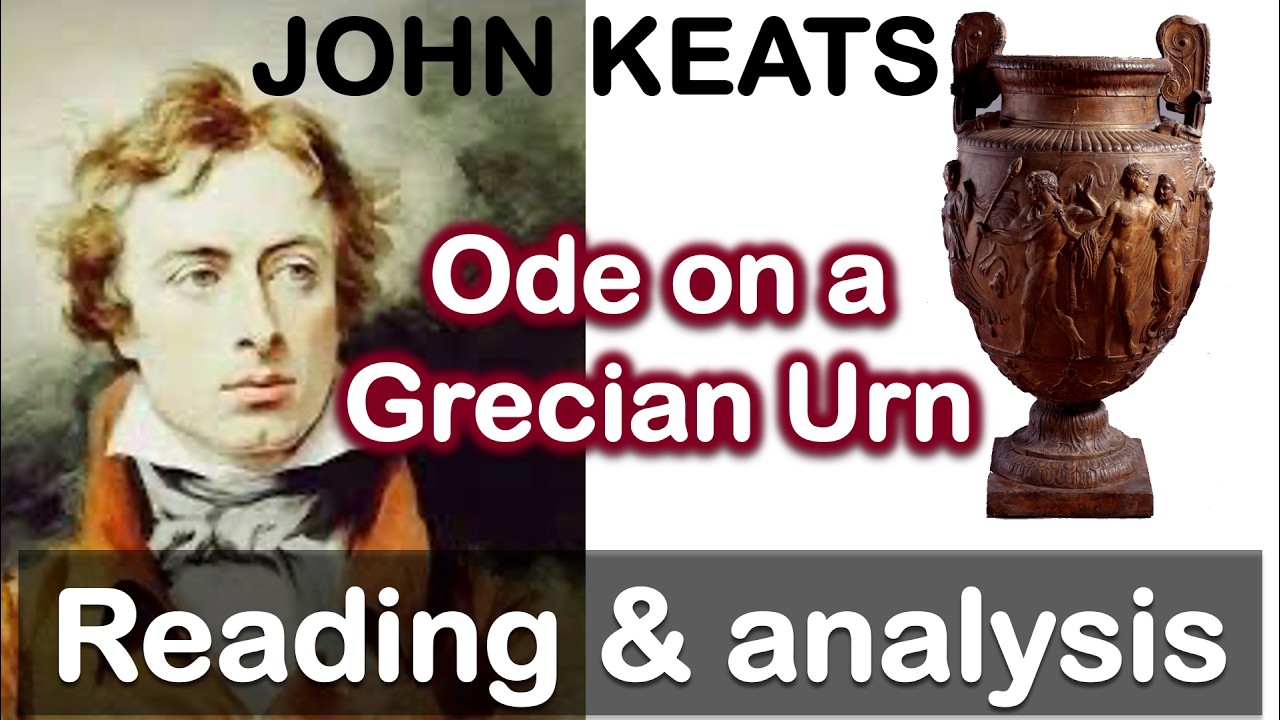
John Keats "Ode on a Grecian Urn". Reading and Analysis. Interactive Q&A for classroom/personal use
"Beauty is truth, truth beauty" — but what does Keats's most debated ...
"Beauty is truth, truth beauty" — but what does Keats's most debated poem actually mean? And what is really going on in those five stanzas?
This video offers a complete reading ...and stanza-by-stanza analysis of "Ode on a Grecian Urn." Starting with the urn itself — a silent, unchanging world of frozen figures — it traces Keats's exploration of imagination versus reality, happiness and suffering, and the world of art as both an escape from and a reflection of human pain.
Along the way: Why are the unheard melodies sweeter than those we can actually hear? Why does "happy happy love" leave the heart "high sorrowful"? What is the mysterious little town, and why is it forever desolate? And what should we make of those famously controversial final lines?
Most poetry analysis videos talk at you. This one talks with you. At key moments throughout the analysis — when Keats poses a question, introduces a new image, or builds toward a difficult conclusion — the video pauses with a five-second countdown, inviting you to think before the analysis continues. You can pause, discuss, or simply reflect.
This makes the video genuinely useful for classroom discussion — teachers can pause and open the question to the room — as well as for individual learners who want to engage actively with the poem rather than simply absorb someone else's interpretation.
Ano Sensei (AKA John R. Yamamoto-Wilson) holds a PhD from the University of Cambridge and taught English literature at Sophia University, Tokyo, for many years.
0:00 Introduction
0:06 Reading — Stanza I
0:46 Analysis — Stanza I: The urn as Sylvan historian
4:43 Reading — Stanza II
5:32 Analysis — Stanza II: Heard and unheard melodies
8:53 Reading — Stanza III
9:35 Analysis — Stanza III: "Happy, happy love"
12:12 Reading — Stanza IV
12:50 Analysis — Stanza IV: The mysterious priest and the little town
16:12 Reading — Stanza V
16:52 Analysis — Stanza V: "Beauty is truth, truth beauty"
This video can also be watched as a playlist (https://www.youtube.com/playlist?list=PLzVb6yL_jY69RMez733LUEYNI4-LgSjGh), or as separate reading (https://youtu.be/sbmiq_70dpg) and analysis (https://youtu.be/QOmQNP26Lak).
© All rights reservedShow More
This video offers a complete reading ...and stanza-by-stanza analysis of "Ode on a Grecian Urn." Starting with the urn itself — a silent, unchanging world of frozen figures — it traces Keats's exploration of imagination versus reality, happiness and suffering, and the world of art as both an escape from and a reflection of human pain.
Along the way: Why are the unheard melodies sweeter than those we can actually hear? Why does "happy happy love" leave the heart "high sorrowful"? What is the mysterious little town, and why is it forever desolate? And what should we make of those famously controversial final lines?
Most poetry analysis videos talk at you. This one talks with you. At key moments throughout the analysis — when Keats poses a question, introduces a new image, or builds toward a difficult conclusion — the video pauses with a five-second countdown, inviting you to think before the analysis continues. You can pause, discuss, or simply reflect.
This makes the video genuinely useful for classroom discussion — teachers can pause and open the question to the room — as well as for individual learners who want to engage actively with the poem rather than simply absorb someone else's interpretation.
Ano Sensei (AKA John R. Yamamoto-Wilson) holds a PhD from the University of Cambridge and taught English literature at Sophia University, Tokyo, for many years.
0:00 Introduction
0:06 Reading — Stanza I
0:46 Analysis — Stanza I: The urn as Sylvan historian
4:43 Reading — Stanza II
5:32 Analysis — Stanza II: Heard and unheard melodies
8:53 Reading — Stanza III
9:35 Analysis — Stanza III: "Happy, happy love"
12:12 Reading — Stanza IV
12:50 Analysis — Stanza IV: The mysterious priest and the little town
16:12 Reading — Stanza V
16:52 Analysis — Stanza V: "Beauty is truth, truth beauty"
This video can also be watched as a playlist (https://www.youtube.com/playlist?list=PLzVb6yL_jY69RMez733LUEYNI4-LgSjGh), or as separate reading (https://youtu.be/sbmiq_70dpg) and analysis (https://youtu.be/QOmQNP26Lak).
© All rights reservedShow More