
Author: Ano Sensei
Format: Video Playlist
Structure: Various
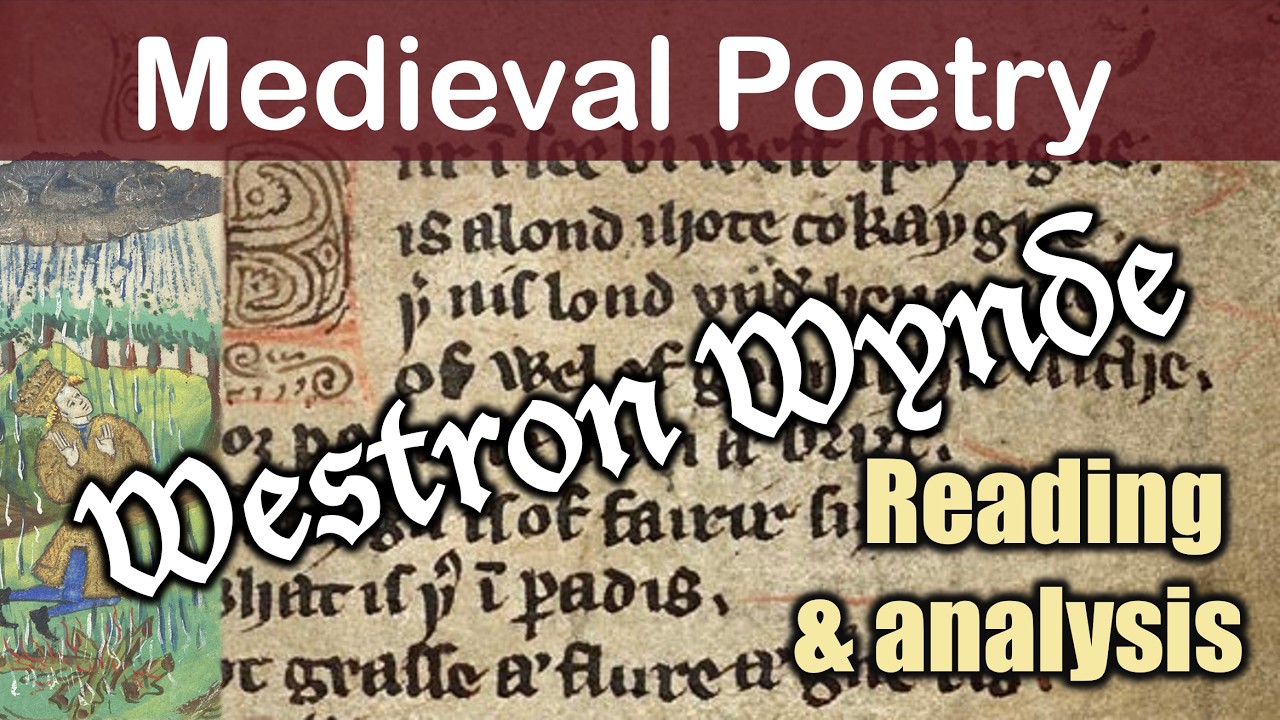
Westron Wynde (Western Wind) — Medieval Lyric: Reading and Analysis
Is the west wind a spring wind bringing relief, or an autumn wind intensifying suffering? Is the invocation of Christ blasphemous or heartfelt — or both? And what is it about this tiny fragment that gives it such universal appeal? As Charles Frey argues, the poem stands at the intersection of pleasure and pain — capturing what he calls "the incalculable duality of desire."
0:00 Introduction
0:12 The melody
0:57 Reading (original text)
1:20 Reading (in modern English)
1:33 Analysis
2:27 Charles Frey's paper
2:51 Chaucer's "Canterbury Tales"
3:09 "Christ"
3:34 The musical accompaniment
3:48 Interpreting the overall meaning
4:22 The juxtaposition of the first two lines and the second two
5:10 The manuscript
5:35 Alliteration
6:08 Words, music and images
My medieval playlist: https://www.youtube.com/watch?v=hSgwv...
If your language is not included in the subtitles, let me know and I will add it.
Westron wynde when wyll thow blow
the smalle rayne downe can Rayne
Cryst yf my love were in my Armys
And I yn my bed Agayne.
© All rights reservedShow More
Now Playing
Westron Wynde (Western Wind) — Medieval Lyric: Reading and Analysis
"Westron Wynde" is one of the most haunting fragments in the English ...
"Westron Wynde" is one of the most haunting fragments in the English language — just four lines, yet capable of expressing an entire world of longing. This video offers a ...reading of the lyric in its original form, followed by a close analysis examining what the poem is actually saying.
Is the west wind a spring wind bringing relief, or an autumn wind intensifying suffering? Is the invocation of Christ blasphemous or heartfelt — or both? And what is it about this tiny fragment that gives it such universal appeal? As Charles Frey argues, the poem stands at the intersection of pleasure and pain — capturing what he calls "the incalculable duality of desire."
0:00 Introduction
0:12 The melody
0:57 Reading (original text)
1:20 Reading (in modern English)
1:33 Analysis
2:27 Charles Frey's paper
2:51 Chaucer's "Canterbury Tales"
3:09 "Christ"
3:34 The musical accompaniment
3:48 Interpreting the overall meaning
4:22 The juxtaposition of the first two lines and the second two
5:10 The manuscript
5:35 Alliteration
6:08 Words, music and images
My medieval playlist: https://www.youtube.com/watch?v=hSgwv...
If your language is not included in the subtitles, let me know and I will add it.
Westron wynde when wyll thow blow
the smalle rayne downe can Rayne
Cryst yf my love were in my Armys
And I yn my bed Agayne.
© All rights reservedShow More
Is the west wind a spring wind bringing relief, or an autumn wind intensifying suffering? Is the invocation of Christ blasphemous or heartfelt — or both? And what is it about this tiny fragment that gives it such universal appeal? As Charles Frey argues, the poem stands at the intersection of pleasure and pain — capturing what he calls "the incalculable duality of desire."
0:00 Introduction
0:12 The melody
0:57 Reading (original text)
1:20 Reading (in modern English)
1:33 Analysis
2:27 Charles Frey's paper
2:51 Chaucer's "Canterbury Tales"
3:09 "Christ"
3:34 The musical accompaniment
3:48 Interpreting the overall meaning
4:22 The juxtaposition of the first two lines and the second two
5:10 The manuscript
5:35 Alliteration
6:08 Words, music and images
My medieval playlist: https://www.youtube.com/watch?v=hSgwv...
If your language is not included in the subtitles, let me know and I will add it.
Westron wynde when wyll thow blow
the smalle rayne downe can Rayne
Cryst yf my love were in my Armys
And I yn my bed Agayne.
© All rights reservedShow More

Now Playing
Medieval English lyrics: "I have a yong suster" (I have a young sister) Reading and analysis.
"I Have a Yong Suster" is a riddle poem of deceptive simplicity — and ...
"I Have a Yong Suster" is a riddle poem of deceptive simplicity — and one of the most ambiguous lyrics in medieval English. Is the "suster" a sister or a ...sweetheart? Is the narrator male or female? And what does the final line really mean?
The poem turns on a series of paradoxes — a cherry without a stone, a dove without bones, a briar without bark — and their resolution. But the resolution itself is ambiguous. Read one way, it is a straightforward love poem about a maiden who has found what she was looking for. Read another, it is a wry and subversive comment on female desire — and what happens to it after marriage.
The poem also has a remarkable afterlife. As the oldest surviving snapshot of a constantly evolving lyric tradition, it connects forward through Scottish ballads like "Captain Wedderburn" and "The Elfin Knight" to "Scarborough Fair" — made famous by Simon and Garfunkel in the 1960s. The riddle at its heart has been travelling through the English-speaking world for at least six centuries.
0:00 Introduction
0:10 A reading (original text)
1:21 A reading (translation into modern English)
2:20 An analysis of the poem
4:26 Related texts
My medieval playlist: https://www.youtube.com/watch?v=hSgwvphXmdI&list=PLzVb6yL_jY69N9G5BqcTQdlGbwWRw2Yf-&index=1
If your language is not included in the subtitles, let me know and I will add it.
© All rights reservedShow More
The poem turns on a series of paradoxes — a cherry without a stone, a dove without bones, a briar without bark — and their resolution. But the resolution itself is ambiguous. Read one way, it is a straightforward love poem about a maiden who has found what she was looking for. Read another, it is a wry and subversive comment on female desire — and what happens to it after marriage.
The poem also has a remarkable afterlife. As the oldest surviving snapshot of a constantly evolving lyric tradition, it connects forward through Scottish ballads like "Captain Wedderburn" and "The Elfin Knight" to "Scarborough Fair" — made famous by Simon and Garfunkel in the 1960s. The riddle at its heart has been travelling through the English-speaking world for at least six centuries.
0:00 Introduction
0:10 A reading (original text)
1:21 A reading (translation into modern English)
2:20 An analysis of the poem
4:26 Related texts
My medieval playlist: https://www.youtube.com/watch?v=hSgwvphXmdI&list=PLzVb6yL_jY69N9G5BqcTQdlGbwWRw2Yf-&index=1
If your language is not included in the subtitles, let me know and I will add it.
© All rights reservedShow More

Now Playing
Medieval English lyrics: "Wanne mine eyhnen misten" (When my eyes mist over) Reading and analysis
"Wanne Mine Eyhnen Misten" — "When My Eyes Mist Over" — is perhaps the ...
"Wanne Mine Eyhnen Misten" — "When My Eyes Mist Over" — is perhaps the most powerful of all medieval "Signs of Death" poems. In a series of accumulating details, linked ...by relentless repetition of "and…and…and", the narrator envisages the onset of death with a terrible sense of inevitability. The funeral bier is already waiting. It is, the poem says, "al to late."
Too late for what? In a world dominated by belief in the afterlife, the answer is clear — too late to amend a wicked life, too late to prepare for what comes next. The poem moves from deathbed to floor to shroud to bier to the grave, where the dead person will be shut up with "myn hus vppe min nose" — my house upon my nose. And at the end, the poet concludes that nothing in this world is worth more than a pea.
Yet the poem is also, in its way, a call to action. The narrator imagines all this in the future — it is not yet too late for the reader. As life slips into death in the poem, so the narrator's fate becomes the reader's own. This is medieval didactic poetry at its most visceral and most human.
0:00 Introduction
0:10 A reading of the medieval text
1:12 A reading in modern English
2:16 An analysis
My medieval playlist: https://www.youtube.com/watch?v=hSgwvphXmdI&list=PLzVb6yL_jY69N9G5BqcTQdlGbwWRw2Yf-&index=1
If your language is not included in the subtitles, let me know and I will add it.
© All rights reservedShow More
Too late for what? In a world dominated by belief in the afterlife, the answer is clear — too late to amend a wicked life, too late to prepare for what comes next. The poem moves from deathbed to floor to shroud to bier to the grave, where the dead person will be shut up with "myn hus vppe min nose" — my house upon my nose. And at the end, the poet concludes that nothing in this world is worth more than a pea.
Yet the poem is also, in its way, a call to action. The narrator imagines all this in the future — it is not yet too late for the reader. As life slips into death in the poem, so the narrator's fate becomes the reader's own. This is medieval didactic poetry at its most visceral and most human.
0:00 Introduction
0:10 A reading of the medieval text
1:12 A reading in modern English
2:16 An analysis
My medieval playlist: https://www.youtube.com/watch?v=hSgwvphXmdI&list=PLzVb6yL_jY69N9G5BqcTQdlGbwWRw2Yf-&index=1
If your language is not included in the subtitles, let me know and I will add it.
© All rights reservedShow More

Now Playing
Medieval English lyrics: "I syng of a mayden" (I sing of a maiden). Reading and analysis
"I Syng of a Mayden" is one of the most beautiful and carefully ...
"I Syng of a Mayden" is one of the most beautiful and carefully crafted lyrics in MiddleEnglish — a poem about the Annunciation and the Immaculate Conception that conceals, beneath ...its apparent simplicity, a remarkable density of allusion and wordplay.
This video offers a reading of the poem in its original Middle English, followed by a close analysis. Why dew rather than rain? Why April specifically? What is the significance of the threefold repetition — grass, flower, spray — and how does it reflect Christian doctrine? And what does "makeles" — matchless — really mean in the context of the final stanza?
The poem draws on Psalm 72, the symbolism of dew as a conventional image of the Holy Spirit, and the medieval calendar's retention of Roman dating — all woven into a lyric of extraordinary economy and grace.
0:00 Introduction
0:14 Reading (original text)
0:58 Reading (in modern English)
1:34 Commentary & analysis
If subtitles are not available in your language, please let me know and I will add them.
© All rights reservedShow More
This video offers a reading of the poem in its original Middle English, followed by a close analysis. Why dew rather than rain? Why April specifically? What is the significance of the threefold repetition — grass, flower, spray — and how does it reflect Christian doctrine? And what does "makeles" — matchless — really mean in the context of the final stanza?
The poem draws on Psalm 72, the symbolism of dew as a conventional image of the Holy Spirit, and the medieval calendar's retention of Roman dating — all woven into a lyric of extraordinary economy and grace.
0:00 Introduction
0:14 Reading (original text)
0:58 Reading (in modern English)
1:34 Commentary & analysis
If subtitles are not available in your language, please let me know and I will add them.
© All rights reservedShow More

Now Playing
Medieval English lyrics: "Thou wandrest in this fals world". A reading,
"You wander in this false world" / "Thou wanderest in this false ...
"You wander in this false world" / "Thou wanderest in this false world". Spoiler alert: This is one of the saddest poems ever written.
© All rights reserved

Now Playing
Middle English The Ormulum, Preface, lines 1-6. Reading and commentary
How did English sound in the Middle Ages? For most medieval texts we ...
How did English sound in the Middle Ages? For most medieval texts we can only estimate — but one remarkable 12th-century work gives us something much more precise.
The Ormulum is ...a medieval biblical commentary written in verse by a monk called Orm, using a unique phonetic spelling system: double consonants indicate a short preceding vowel, single consonants a long one. This makes it an invaluable window into the pronunciation of East Midlands English at the time it was written — more reliable, paradoxically, than many later texts, since English spelling and pronunciation drifted increasingly apart from around 1500 onwards.
This video offers a reading of the first six lines of the preface, with an explanation of the spelling conventions, the metre, and what the opening lines actually mean — including the intriguing reference to Amminadab's chariot from the Song of Solomon, interpreted in the Middle Ages as a prefiguring of the four gospels.
© All rights reservedShow More
The Ormulum is ...a medieval biblical commentary written in verse by a monk called Orm, using a unique phonetic spelling system: double consonants indicate a short preceding vowel, single consonants a long one. This makes it an invaluable window into the pronunciation of East Midlands English at the time it was written — more reliable, paradoxically, than many later texts, since English spelling and pronunciation drifted increasingly apart from around 1500 onwards.
This video offers a reading of the first six lines of the preface, with an explanation of the spelling conventions, the metre, and what the opening lines actually mean — including the intriguing reference to Amminadab's chariot from the Song of Solomon, interpreted in the Middle Ages as a prefiguring of the four gospels.
© All rights reservedShow More

Now Playing
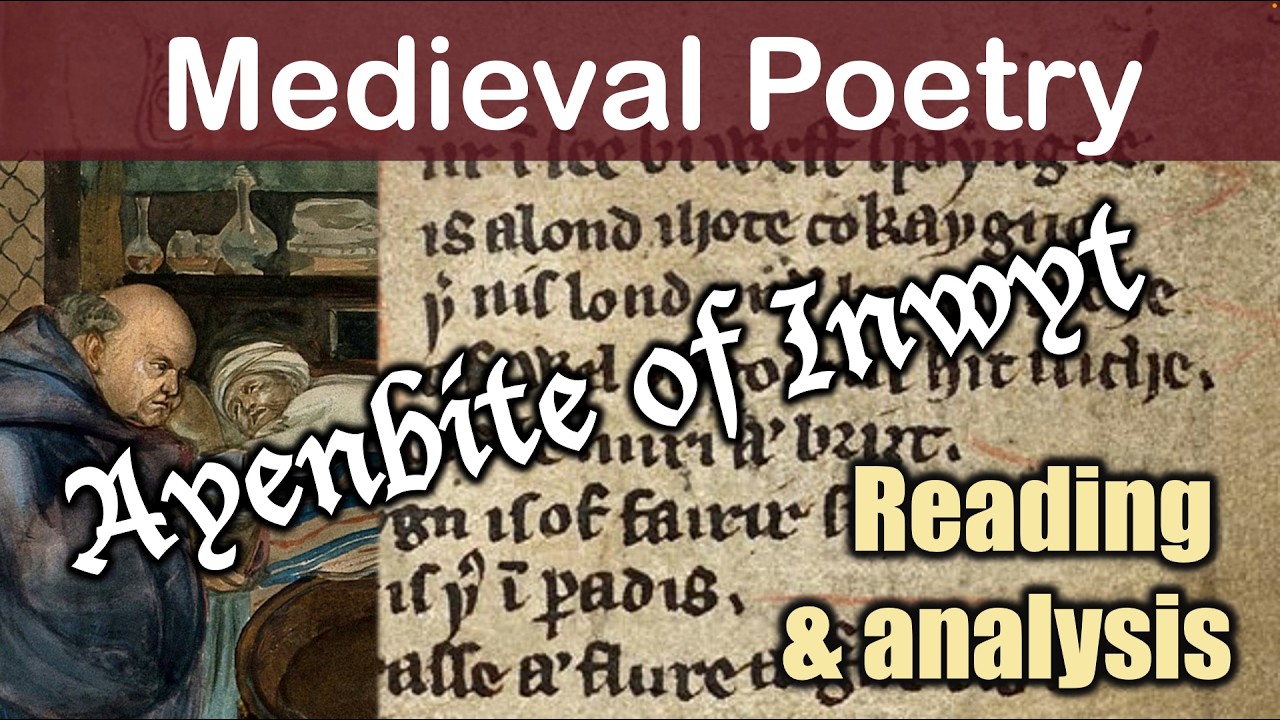
Middle English: Ayenbite of Inwyt (Agenbite of inwit; Remorse of Conscience). Reading & analysis
The Ayenbite of Inwyt — literally "the again-biting of the inner ...
The Ayenbite of Inwyt — literally "the again-biting of the inner awareness", or in plain English, "remorse of conscience" — is a medieval text with a unique value for anyone ...interested in how English was spoken 700 years ago.
Written in 1340 by Dan Michel, a brother of the Cloister of Saint Augustine of Canterbury, it is a literal translation of a French devotional text. What makes it extraordinary is that the author tells us exactly where and when it was written, and specifically identifies it as "written in the English of Kent" — making it a precise snapshot of the Kentish dialect at a known moment in time.
This video offers a reading of the opening lines of the preface, with an introduction to the yogh (ȝ) — a medieval letter with several pronunciation variants — and an examination of the distinctive features of the Kentish dialect, including its tendency towards "e" rather than "i", and "v" rather than "f".
If subtitles are not available in your language, let me know and I will add them.
© All rights reservedShow More
Written in 1340 by Dan Michel, a brother of the Cloister of Saint Augustine of Canterbury, it is a literal translation of a French devotional text. What makes it extraordinary is that the author tells us exactly where and when it was written, and specifically identifies it as "written in the English of Kent" — making it a precise snapshot of the Kentish dialect at a known moment in time.
This video offers a reading of the opening lines of the preface, with an introduction to the yogh (ȝ) — a medieval letter with several pronunciation variants — and an examination of the distinctive features of the Kentish dialect, including its tendency towards "e" rather than "i", and "v" rather than "f".
If subtitles are not available in your language, let me know and I will add them.
© All rights reservedShow More

Now Playing
Geoffrey Chaucer, Canterbury Tales, Prologue, lines 1-18: a reading.
Ano sensei has made in-depth videos on Keats's Odes ...
Ano sensei has made in-depth videos on Keats's Odes (https://tinyurl.com/anokeats), Coleridge's "Kubla Khan" (https://tinyurl.com/anokubla), Wordsworth's "Tintern Abbey" (https://tinyurl.com/anotintern) and many others. Subscribe and get the best poetry analysis videos on ...YouTube!
Subscribe to "Ano sensei! Educational videos" for more videos on English literature, language, history, culture and society.
© All rights reservedShow More
Subscribe to "Ano sensei! Educational videos" for more videos on English literature, language, history, culture and society.
© All rights reservedShow More

Now Playing
Middle English. Readings from Ormulum, Ayenbite of Inwyt, and The Canterbury Tales.
Please check the playlist for updated readings with improved sound ...
Please check the playlist for updated readings with improved sound quality and additional information about the texts: https://www.youtube.com/playlist?list=PLzVb6yL_jY69N9G5BqcTQdlGbwWRw2Yf-
We cannot be 100% sure of how English was spoken in the past, ...but scholars can make an educated guess that will give us at least some idea. To get a more detailed understanding, I recommend listening to some of the recordings mentioned at the end of this video.
© All rights reserved
0:00 Intro
0:10 Preamble
0:27 Ormulum: Comment
0:39 Ormulum: Reading
1:05 Ayenbite of Inwyt: Comment
1:17 Ayenbite of Inwyt: Reading
1:37 Canterbury Tales: Comment
2:08 Canterbury Tales: Reading
3:12 Further recordings
The opening lines of three texts of the later Middle Ages (the Ormulum of Orm, Ayenbite of Inwyt (Aȝenbite of Inwit), and Geoffrey Chaucer's Canterbury Tales, showing the pronunciation of some of the dialects of English at that time.Show More
We cannot be 100% sure of how English was spoken in the past, ...but scholars can make an educated guess that will give us at least some idea. To get a more detailed understanding, I recommend listening to some of the recordings mentioned at the end of this video.
© All rights reserved
0:00 Intro
0:10 Preamble
0:27 Ormulum: Comment
0:39 Ormulum: Reading
1:05 Ayenbite of Inwyt: Comment
1:17 Ayenbite of Inwyt: Reading
1:37 Canterbury Tales: Comment
2:08 Canterbury Tales: Reading
3:12 Further recordings
The opening lines of three texts of the later Middle Ages (the Ormulum of Orm, Ayenbite of Inwyt (Aȝenbite of Inwit), and Geoffrey Chaucer's Canterbury Tales, showing the pronunciation of some of the dialects of English at that time.Show More

Now Playing
Middle English (1066 - 1450). A Short Introduction: The Norman influence, dialects, Chaucer
A short introduction to the main dialects of Middle English and its ...
A short introduction to the main dialects of Middle English and its relationship to Norman French.
Please check my video at https://www.youtube.com/watch?v=W28DkNRkUPA for readings of some Middle English works.
This ...video is a comprehensive documentary explaining how the English language underwent significant language change between 1066 and 1450, specifically focusing on the impact of the Norman conquest. I explore the evolution of medieval language and its influence, providing a detailed history of English during this crucial period. This historical linguistics journey illustrates how English history shaped the language we know today.
0:00 Intro
0:11 Norman England
0:29 Middle English
0:42 The influence of Norman French
1:05 The emergence of Early Modern English
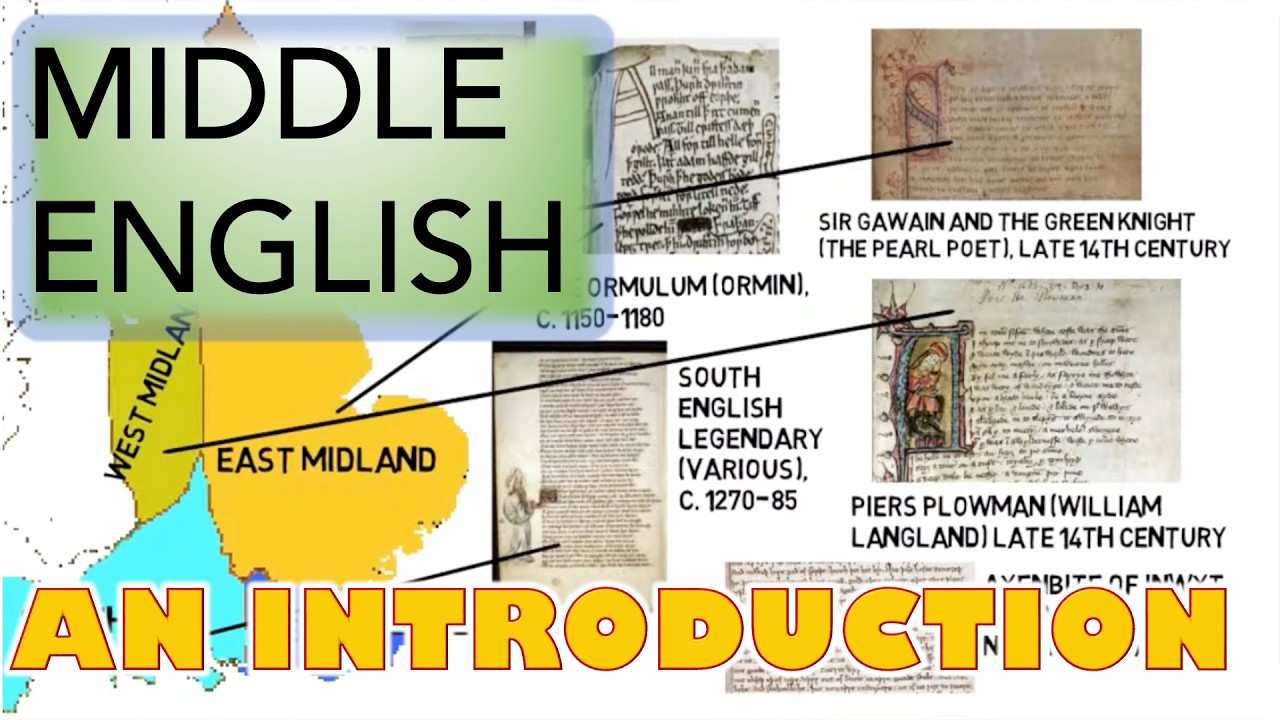
1:16 The dialects of Middle English
1:30 East Midlands dialect: "Ormulum"
1:40 Southern dialect: "South English Legendary"
1:49 Northern dialect: "Cursor Mundi"
1:59 Kentish dialect: "Ayenbite of Inwyt"
2:10 West Midland dialect: "Gawain" and "Piers Plowman"
2:24 London dialect: "Canterbury Tales"
3:00 Further study: Skeats, "English Dialects"
© All rights reservedShow More
Please check my video at https://www.youtube.com/watch?v=W28DkNRkUPA for readings of some Middle English works.
This ...video is a comprehensive documentary explaining how the English language underwent significant language change between 1066 and 1450, specifically focusing on the impact of the Norman conquest. I explore the evolution of medieval language and its influence, providing a detailed history of English during this crucial period. This historical linguistics journey illustrates how English history shaped the language we know today.
0:00 Intro
0:11 Norman England
0:29 Middle English
0:42 The influence of Norman French
1:05 The emergence of Early Modern English
1:16 The dialects of Middle English
1:30 East Midlands dialect: "Ormulum"
1:40 Southern dialect: "South English Legendary"
1:49 Northern dialect: "Cursor Mundi"
1:59 Kentish dialect: "Ayenbite of Inwyt"
2:10 West Midland dialect: "Gawain" and "Piers Plowman"
2:24 London dialect: "Canterbury Tales"
3:00 Further study: Skeats, "English Dialects"
© All rights reservedShow More

Now Playing
Sir Gawain & the Green Knight: Does *anyone* know what it means? Intro & analysis by Ano Sensei
Sir Gawain and the Green Knight is one of the greatest works of ...
Sir Gawain and the Green Knight is one of the greatest works of medieval literature — and one of the most mysterious. Who wrote it? Where exactly was it written? ...And what does it actually mean? Even Harvard medievalist Derek Pearsall admitted he wasn't sure.
This video introduces the poem — its manuscript history, the debates over dialect and authorship, its remarkable structure (including the famous "bob and wheel") — and explores why, after 600 years, it continues to puzzle and captivate readers.
The Gawain poet also wrote Pearl and two other shorter works. If you read nothing else from medieval literature, these are the ones to read — in the original Middle English if possible, with a translation to hand.
0:00 Introduction
0:20 Basic background information
0:42 The manuscript
0:56 Dating the manuscript
1:13 The dialect and region
1:47 The author vs. the scribe
2:18 A reading of the opening lines
3:33 A reading in modern English
4:30 The schwa
5:04 Uncertainties about the text
5:18 The meaning of the text
5:39 The deeper meaning
6:32 The literal meaning
7:00 "bobbaunce"
7:21 The Green Knight's head
8:14 Poetic techniques and structure
8:41 Conclusion
© All rights reservedShow More
This video introduces the poem — its manuscript history, the debates over dialect and authorship, its remarkable structure (including the famous "bob and wheel") — and explores why, after 600 years, it continues to puzzle and captivate readers.
The Gawain poet also wrote Pearl and two other shorter works. If you read nothing else from medieval literature, these are the ones to read — in the original Middle English if possible, with a translation to hand.
0:00 Introduction
0:20 Basic background information
0:42 The manuscript
0:56 Dating the manuscript
1:13 The dialect and region
1:47 The author vs. the scribe
2:18 A reading of the opening lines
3:33 A reading in modern English
4:30 The schwa
5:04 Uncertainties about the text
5:18 The meaning of the text
5:39 The deeper meaning
6:32 The literal meaning
7:00 "bobbaunce"
7:21 The Green Knight's head
8:14 Poetic techniques and structure
8:41 Conclusion
© All rights reservedShow More

Now Playing
Geoffrey Chaucer, The Canterbury Tales: General Prologue, lines 1-18. Reading and analysis; satire.
The opening lines of Chaucer's Canterbury Tales are among the most ...
The opening lines of Chaucer's Canterbury Tales are among the most famous in English literature — but how did they actually sound, and what are they really saying?
This video offers ...a reading of the General Prologue lines 1-18 in Middle English, set in the context of the emerging London dialect of the late fourteenth century. It also examines the satirical dimension of these lines — are they simply a celebration of an English spring, or is Chaucer already making a subtle joke at the pilgrims' expense?
There's also a surprising connection to modern Cockney pronunciation: Londoners today pronounce certain words much as Chaucer did 700 years ago.
0:00 Introduction
0:10 A new dialect
0:25 Chancery Standard
0:40 The Canterbury Tales
0:56 A reading
1:59 Approaches to Chaucer
2:27 Chaucer as a satirist
2:45 A joke
3:40 The Tales are incomplete
4:08 Satire and modern scholarship
4:35 Chaucer's language
5:05 Middle English and Cockney
5:48 Find out more
6:16 Join this channelShow More
This video offers ...a reading of the General Prologue lines 1-18 in Middle English, set in the context of the emerging London dialect of the late fourteenth century. It also examines the satirical dimension of these lines — are they simply a celebration of an English spring, or is Chaucer already making a subtle joke at the pilgrims' expense?
There's also a surprising connection to modern Cockney pronunciation: Londoners today pronounce certain words much as Chaucer did 700 years ago.
0:00 Introduction
0:10 A new dialect
0:25 Chancery Standard
0:40 The Canterbury Tales
0:56 A reading
1:59 Approaches to Chaucer
2:27 Chaucer as a satirist
2:45 A joke
3:40 The Tales are incomplete
4:08 Satire and modern scholarship
4:35 Chaucer's language
5:05 Middle English and Cockney
5:48 Find out more
6:16 Join this channelShow More
