
Author: Ano Sensei
Format: Video
Subject Matter: aspect, context, live work study teach speak, present perfect continuous, present perfect simple, stative verbs
Related content:
- • Gone to or been to? What most textbooks get wrong | ENGLISH IN CONTEXT (Video)
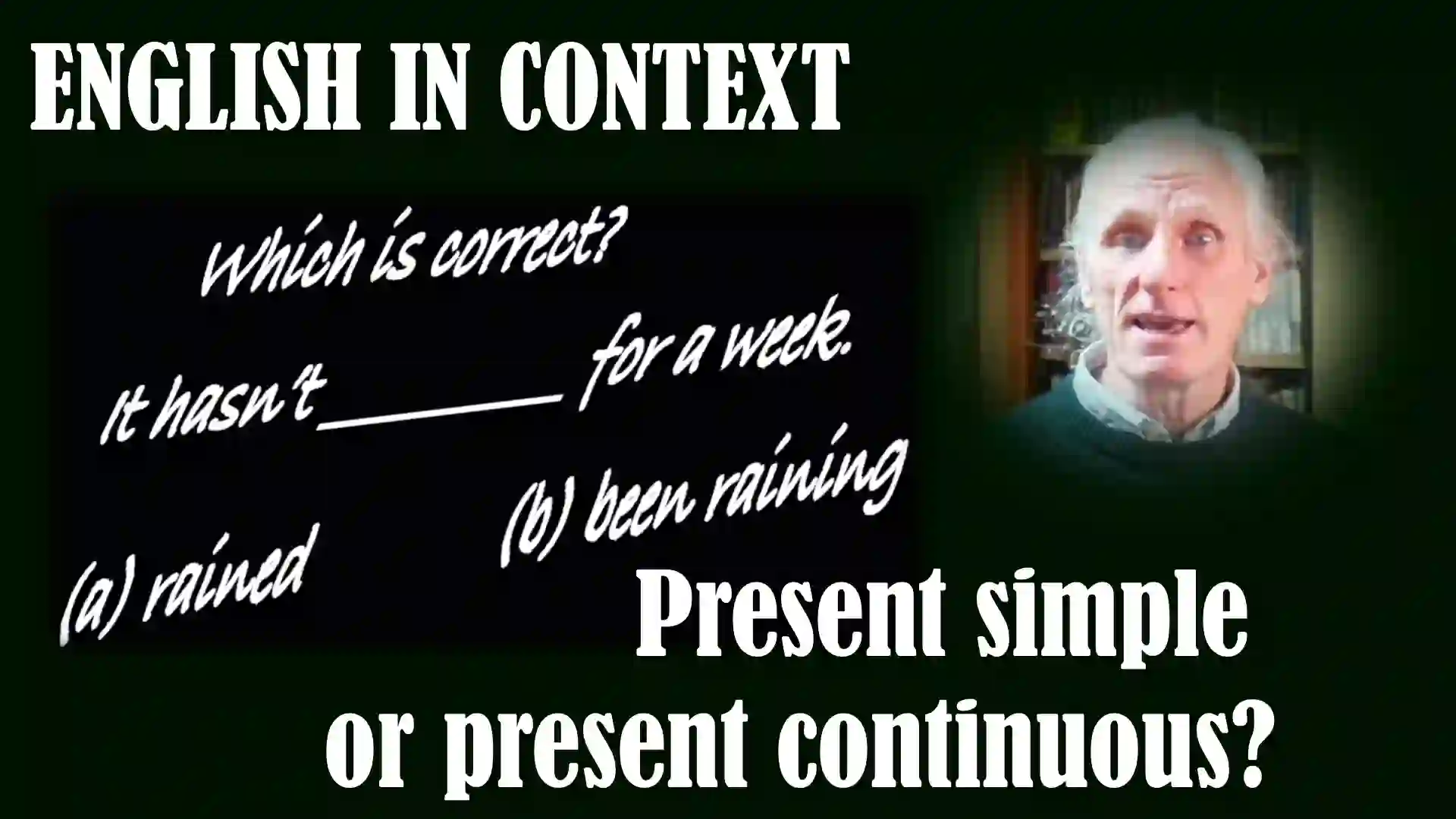
- • It hasn’t rained or hasn’t been raining for a week | both correct? ENGLISH IN CONTEXT (Video)
- • Curated Grammar Livestream: Your Questions Answered (Video Playlist)
- • Basic English Grammar: The Perfect Forms of the Verb (Video Playlist)
- • English in Context: Basic English Grammar (Video Playlist)
📚 Part of a series: English in Context: Basic English Grammar
🧑🎓"Have studied" or "have been studying"? Why your textbook may be wrong | ENGLISH IN CONTEXT 👀
For most verbs, the difference between present perfect simple and continuous is clear enough: the simple form refers to a completed action, the continuous to an activity over a period of time. But there's a group of verbs — live, work, teach, study, speak (a language) — that can function as both stative and action verbs. For this group, the two forms are largely interchangeable in most contexts. The common textbook claim that simple implies completion (or that the activity is about to stop) simply doesn't hold.
In this video I work through the logic carefully: why "I've worked in a factory for twenty years" does not imply you're about to leave, and why "I've been working in a factory for twenty years" adds nothing extra about continuation. For practical purposes, the two mean the same thing — and teaching otherwise misleads learners.
There are some specific contexts where the two forms are not interchangeable. I discuss those in a separate video — click the link below to go straight to that discussion: https://youtu.be/ZZvHkDYbNh8?t=209
What this video covers:
Present perfect simple vs continuous: the general distinction
Stative verbs and why they take the simple form only
The group of verbs (live, work, teach, study, speak) that behave differently
Why "have studied" and "have been studying" are interchangeable in most contexts
Why the "simple = completed" rule breaks down for this group
I'm John R. Yamamoto-Wilson — formerly Professor of English Literature at Sophia University, Tokyo, with a PhD from the University of Cambridge. These videos are aimed at intermediate learners of English, and at the teachers who work with them. 📌 Part of the English in Context series — intermediate grammar points that textbooks often explain poorly or get wrong. Click here for the complete series: https://www.youtube.com/playlist?list=PLzVb6yL_jY6_sKngAN_gYB8w-KC20AGP4
© All rights reservedShow More