
Author: Ano Sensei
Format: Video
Subject Matter: backshift, conditionals, context, mixed conditionals, reported speech, second conditional, third conditional, time frame
Related content:
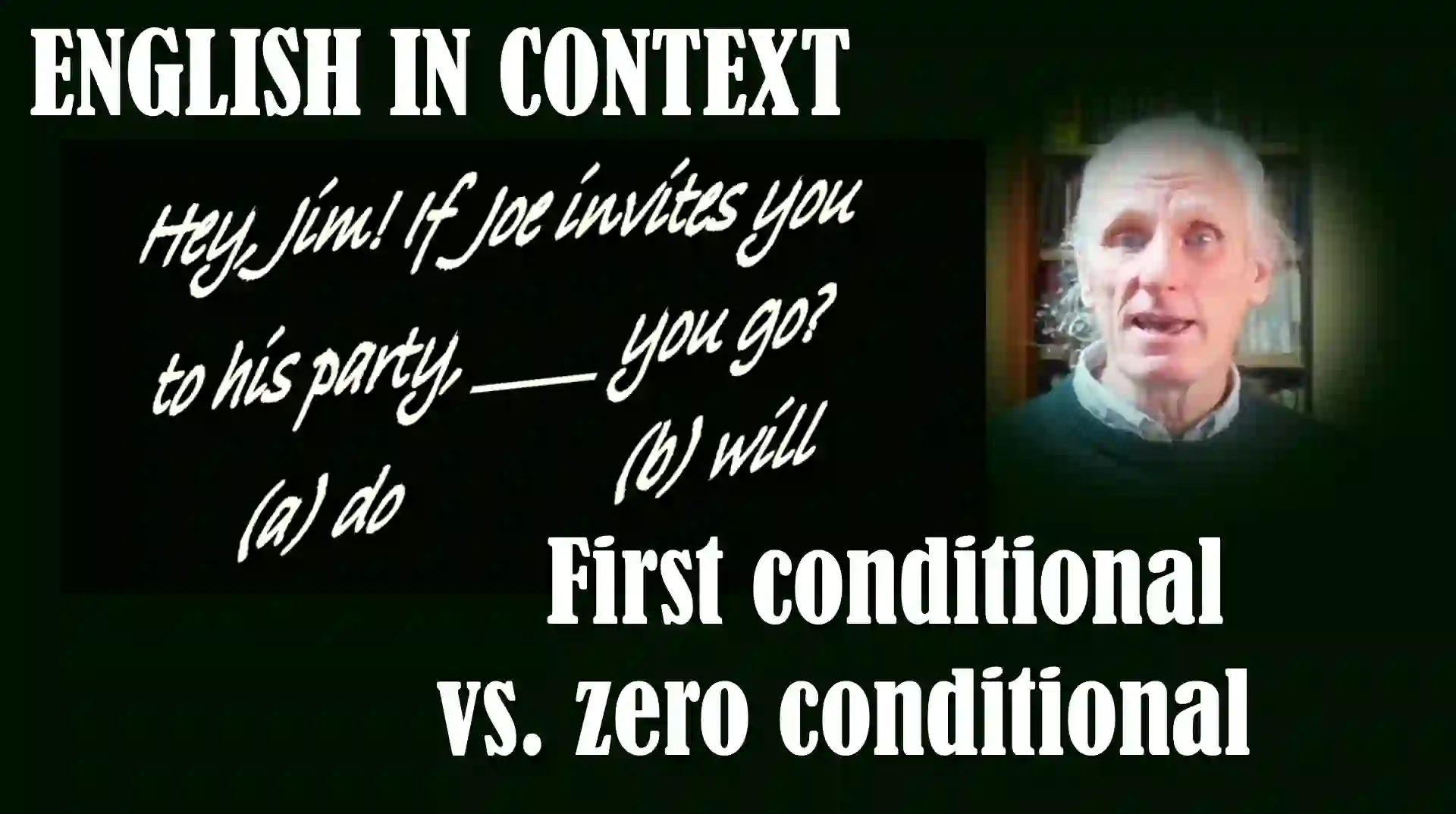
- • Do you go or will you go? Zero vs first conditional | ENGLISH IN CONTEXT (Video)
- • Do you always need backshift in reported speech? ENGLISH IN CONTEXT (Video)
- • Curated Grammar Livestream: Your Questions Answered (Video Playlist)
- • English in Context: Basic English Grammar (Video Playlist)
- • Curated Grammar Livestream: Your Questions Answered (Video Playlist)
📚 Part of a series: English in Context: Basic English Grammar
🧑🎓"If I knew, I would tell you" or "I would have told you"? Mixed conditionals ENGLISH IN CONTEXT👀
Students typically learn the first, second and third conditionals, and perhaps the zero conditional. What most textbooks don't cover is the range of mixed conditionals — constructions that combine elements from different time frames. In this video I use a detective scenario to show how "If I knew, I would have told you" mixes a present condition (I don't know now) with a past result (I would already have told you before now). That's a genuinely different meaning from either the standard second or third conditional — and it's the kind of thing that real language does all the time.
The video also touches on the connection between mixed conditionals and backshift in reported speech, and on the fact that native speakers don't always follow the rules taught in the classroom.
For more on related topics: https://youtu.be/UG1c09rNAXM and https://youtu.be/o0kkmbg2N9M
What this video covers:
The standard second and third conditionals and what they express
How "If I knew, I would have told you" creates a mixed conditional
The three constructions compared: present/future, fully past, and mixed
The connection between mixed conditionals and backshift in reported speech
Why real language doesn't always follow textbook rules
I'm John R. Yamamoto-Wilson — formerly Professor of English Literature at Sophia University, Tokyo, with a PhD from the University of Cambridge. These videos are aimed at intermediate learners of English, and at the teachers who work with them. 📌 Part of the English in Context series — intermediate grammar points that textbooks often explain poorly or get wrong. Click here for the complete series: https://www.youtube.com/playlist?list=PLzVb6yL_jY6_sKngAN_gYB8w-KC20AGP4
© All rights reservedShow More