
Author: Ano Sensei
Format: Video Playlist
Structure: Various
The Tiger, The Lamb & The Marriage of Heaven and Hell: Introduction to the poems of William Blake #1
Drawing on Blake's own words from "The Marriage of Heaven and Hell" (1790-93), I explore how he saw attraction and repulsion, reason and energy, love and hate, good and evil, heaven and hell as necessary contraries. The video introduces the famous pairing of "The Lamb" and "The Tyger" as an example of how Blake expresses these opposing states throughout his Songs of Innocence and of Experience (1794).
What's covered:
Blake's philosophy of contraries from "The Marriage of Heaven and Hell"
The balance of positive and negative elements in poetry
Introduction to Songs of Innocence and of Experience
Preview of the analytical approach used throughout this series
Who it's for:
For students beginning to study Blake, A-Level/university literature courses, or anyone who wants to understand the philosophical foundation behind Blake's most famous poems.
0:00 Intro
0:12 Blake and the balancing of opposites
0:42: "The Marriage of Heaven and Hell"
1:20 "Songs of Innocence and of Experience"
1:30 "The Lamb" and "The Tiger"
2:34 Conclusion
This is the first of a series of videos on the poetry of William Blake (1757-1827). In this introductory video I focus on the way Blake emphasizes opposites, referring to Blake's "The Marriage of Heaven and Hell" ("without contraries is no progression") and to "The Lamb" and "The Tyger", two poems in "The Songs of Innocence and of Experience" (1794).
In this series, I will be analyzing a number of Blake's poems in detail, focusing mainly on the contrasting opposites in his poetry. Playlist link: https://www.youtube.com/watch?v=vQtMDbUsOwY&list=PLzVb6yL_jY69kJRNsa_3wE54b8Tf8jp-b&index=2
© All rights reserved
================================
The Tyger
Tyger Tyger, burning bright,
In the forests of the night;
What immortal hand or eye,
Could frame thy fearful symmetry?
In what distant deeps or skies.
Burnt the fire of thine eyes?
On what wings dare he aspire?
What the hand, dare seize the fire?
And what shoulder, & what art,
Could twist the sinews of thy heart?
And when thy heart began to beat,
What dread hand? & what dread feet?
What the hammer? what the chain,
In what furnace was thy brain?
What the anvil? what dread grasp,
Dare its deadly terrors clasp!
When the stars threw down their spears
And water'd heaven with their tears:
Did he smile his work to see?
Did he who made the Lamb make thee?
Tyger Tyger burning bright,
In the forests of the night:
What immortal hand or eye,
Dare frame thy fearful symmetry?
The Lamb
Little Lamb who made thee
Dost thou know who made thee
Gave thee life & bid thee feed.
By the stream & o'er the mead;
Gave thee clothing of delight,
Softest clothing wooly bright;
Gave thee such a tender voice,
Making all the vales rejoice!
Little Lamb who made thee
Dost thou know who made thee
Little Lamb I'll tell thee,
Little Lamb I'll tell thee!
He is called by thy name,
For he calls himself a Lamb:
He is meek & he is mild,
He became a little child:
I a child & thou a lamb,
We are called by his name.
Little Lamb God bless thee.
#romanticpoetry #blake #williamblake #blaketiger #blakelamb #naturepoem #naturepoetry #nature #poetry #poetryloversShow More

Now Playing
The Tiger, The Lamb & The Marriage of Heaven and Hell: Introduction to the poems of William Blake #1
An introduction to William Blake's central philosophy of contraries ...
An introduction to William Blake's central philosophy of contraries and how it shapes all his poetry. This video sets up a series analyzing Blake's poems through the lens of his ...belief that "Without contraries is no progression" - that opposing forces are essential to human existence and creativity.
Drawing on Blake's own words from "The Marriage of Heaven and Hell" (1790-93), I explore how he saw attraction and repulsion, reason and energy, love and hate, good and evil, heaven and hell as necessary contraries. The video introduces the famous pairing of "The Lamb" and "The Tyger" as an example of how Blake expresses these opposing states throughout his Songs of Innocence and of Experience (1794).
What's covered:
Blake's philosophy of contraries from "The Marriage of Heaven and Hell"
The balance of positive and negative elements in poetry
Introduction to Songs of Innocence and of Experience
Preview of the analytical approach used throughout this series
Who it's for:
For students beginning to study Blake, A-Level/university literature courses, or anyone who wants to understand the philosophical foundation behind Blake's most famous poems.
0:00 Intro
0:12 Blake and the balancing of opposites
0:42: "The Marriage of Heaven and Hell"
1:20 "Songs of Innocence and of Experience"
1:30 "The Lamb" and "The Tiger"
2:34 Conclusion
This is the first of a series of videos on the poetry of William Blake (1757-1827). In this introductory video I focus on the way Blake emphasizes opposites, referring to Blake's "The Marriage of Heaven and Hell" ("without contraries is no progression") and to "The Lamb" and "The Tyger", two poems in "The Songs of Innocence and of Experience" (1794).
In this series, I will be analyzing a number of Blake's poems in detail, focusing mainly on the contrasting opposites in his poetry. Playlist link: https://www.youtube.com/watch?v=vQtMDbUsOwY&list=PLzVb6yL_jY69kJRNsa_3wE54b8Tf8jp-b&index=2
© All rights reserved
================================
The Tyger
Tyger Tyger, burning bright,
In the forests of the night;
What immortal hand or eye,
Could frame thy fearful symmetry?
In what distant deeps or skies.
Burnt the fire of thine eyes?
On what wings dare he aspire?
What the hand, dare seize the fire?
And what shoulder, & what art,
Could twist the sinews of thy heart?
And when thy heart began to beat,
What dread hand? & what dread feet?
What the hammer? what the chain,
In what furnace was thy brain?
What the anvil? what dread grasp,
Dare its deadly terrors clasp!
When the stars threw down their spears
And water'd heaven with their tears:
Did he smile his work to see?
Did he who made the Lamb make thee?
Tyger Tyger burning bright,
In the forests of the night:
What immortal hand or eye,
Dare frame thy fearful symmetry?
The Lamb
Little Lamb who made thee
Dost thou know who made thee
Gave thee life & bid thee feed.
By the stream & o'er the mead;
Gave thee clothing of delight,
Softest clothing wooly bright;
Gave thee such a tender voice,
Making all the vales rejoice!
Little Lamb who made thee
Dost thou know who made thee
Little Lamb I'll tell thee,
Little Lamb I'll tell thee!
He is called by thy name,
For he calls himself a Lamb:
He is meek & he is mild,
He became a little child:
I a child & thou a lamb,
We are called by his name.
Little Lamb God bless thee.
#romanticpoetry #blake #williamblake #blaketiger #blakelamb #naturepoem #naturepoetry #nature #poetry #poetryloversShow More
Drawing on Blake's own words from "The Marriage of Heaven and Hell" (1790-93), I explore how he saw attraction and repulsion, reason and energy, love and hate, good and evil, heaven and hell as necessary contraries. The video introduces the famous pairing of "The Lamb" and "The Tyger" as an example of how Blake expresses these opposing states throughout his Songs of Innocence and of Experience (1794).
What's covered:
Blake's philosophy of contraries from "The Marriage of Heaven and Hell"
The balance of positive and negative elements in poetry
Introduction to Songs of Innocence and of Experience
Preview of the analytical approach used throughout this series
Who it's for:
For students beginning to study Blake, A-Level/university literature courses, or anyone who wants to understand the philosophical foundation behind Blake's most famous poems.
0:00 Intro
0:12 Blake and the balancing of opposites
0:42: "The Marriage of Heaven and Hell"
1:20 "Songs of Innocence and of Experience"
1:30 "The Lamb" and "The Tiger"
2:34 Conclusion
This is the first of a series of videos on the poetry of William Blake (1757-1827). In this introductory video I focus on the way Blake emphasizes opposites, referring to Blake's "The Marriage of Heaven and Hell" ("without contraries is no progression") and to "The Lamb" and "The Tyger", two poems in "The Songs of Innocence and of Experience" (1794).
In this series, I will be analyzing a number of Blake's poems in detail, focusing mainly on the contrasting opposites in his poetry. Playlist link: https://www.youtube.com/watch?v=vQtMDbUsOwY&list=PLzVb6yL_jY69kJRNsa_3wE54b8Tf8jp-b&index=2
© All rights reserved
================================
The Tyger
Tyger Tyger, burning bright,
In the forests of the night;
What immortal hand or eye,
Could frame thy fearful symmetry?
In what distant deeps or skies.
Burnt the fire of thine eyes?
On what wings dare he aspire?
What the hand, dare seize the fire?
And what shoulder, & what art,
Could twist the sinews of thy heart?
And when thy heart began to beat,
What dread hand? & what dread feet?
What the hammer? what the chain,
In what furnace was thy brain?
What the anvil? what dread grasp,
Dare its deadly terrors clasp!
When the stars threw down their spears
And water'd heaven with their tears:
Did he smile his work to see?
Did he who made the Lamb make thee?
Tyger Tyger burning bright,
In the forests of the night:
What immortal hand or eye,
Dare frame thy fearful symmetry?
The Lamb
Little Lamb who made thee
Dost thou know who made thee
Gave thee life & bid thee feed.
By the stream & o'er the mead;
Gave thee clothing of delight,
Softest clothing wooly bright;
Gave thee such a tender voice,
Making all the vales rejoice!
Little Lamb who made thee
Dost thou know who made thee
Little Lamb I'll tell thee,
Little Lamb I'll tell thee!
He is called by thy name,
For he calls himself a Lamb:
He is meek & he is mild,
He became a little child:
I a child & thou a lamb,
We are called by his name.
Little Lamb God bless thee.
#romanticpoetry #blake #williamblake #blaketiger #blakelamb #naturepoem #naturepoetry #nature #poetry #poetryloversShow More

Now Playing
"Never seek to tell thy love". Reading and analysis. Introduction to the poetry of William Blake # 2
A close reading of William Blake's "Never seek to tell thy love" (also ...
A close reading of William Blake's "Never seek to tell thy love" (also known as "Love's Secret"), exploring how the poem operates on multiple levels of opposition: love versus telling ...love, action versus words, silence versus sound. This analysis demonstrates Blake's philosophy of contraries in action.
Working through the poem stanza by stanza, I examine how Blake presents love as a silent, invisible force like the wind, while "telling" love leads to loss and departure. The analysis reveals deeper layers: the verb "told" as a homophone for "tolled" (like a funeral bell), the older meaning of "tell" as "count" or "measure," and the connection to Cordelia in Shakespeare's King Lear - who also refused to measure out her love in words.
What's covered:
The central opposition: love (positive) vs telling love (negative)
Action and movement vs words and speech
Multiple meanings of "tell" and "told"
Blake's friend Fuseli's King Lear painting and its possible influence
How Blake uses verb analysis to reveal meaning
Part of a series on Blake's philosophy of contraries. Next: "A Poison Tree" and the consequences of not telling.
How it's for:
For students studying Blake's Songs of Innocence and Experience, A-Level/university literature courses, or anyone interested in multi-layered poetic analysis.
0:00 Intro
0:30 Never seek to tell thy love: A reading
1:14 Love (positive); telling love (negative)
1:58 Expressing vs. telling
2:09 Looking at the verbs
2:50 Action vs. words
3:05 "Told" and "tolled"
3:35 Telling and counting
4:00 Cordelia in King Lear
4:18 Fuseli's painting
4:29 Conclusion
In this second video in the series on Blake's poetry I examine the way in which Blake creates a contrast between words and action in his deceptively simple poem, "Never seek to tell your love", sometimes known as "Love's secret".
The first video in the series can be found here: https://youtu.be/WXBXodU5qKI
© All rights reserved
#romanticpoetry #blake #williamblake #blakepoetry #naturepoem #naturepoetry #nature #poetry #poetrylovers #neverseek #lovepoem
=====================================================
Never seek to tell thy love
Love that never told can be
For the gentle wind does move
Silently invisibly
I told my love I told my love
I told her all my heart
Trembling cold in ghastly fears
Ah she doth depart
Soon as she was gone from me
A traveller came by
Silently invisibly
He took her with a sighShow More
Working through the poem stanza by stanza, I examine how Blake presents love as a silent, invisible force like the wind, while "telling" love leads to loss and departure. The analysis reveals deeper layers: the verb "told" as a homophone for "tolled" (like a funeral bell), the older meaning of "tell" as "count" or "measure," and the connection to Cordelia in Shakespeare's King Lear - who also refused to measure out her love in words.
What's covered:
The central opposition: love (positive) vs telling love (negative)
Action and movement vs words and speech
Multiple meanings of "tell" and "told"
Blake's friend Fuseli's King Lear painting and its possible influence
How Blake uses verb analysis to reveal meaning
Part of a series on Blake's philosophy of contraries. Next: "A Poison Tree" and the consequences of not telling.
How it's for:
For students studying Blake's Songs of Innocence and Experience, A-Level/university literature courses, or anyone interested in multi-layered poetic analysis.
0:00 Intro
0:30 Never seek to tell thy love: A reading
1:14 Love (positive); telling love (negative)
1:58 Expressing vs. telling
2:09 Looking at the verbs
2:50 Action vs. words
3:05 "Told" and "tolled"
3:35 Telling and counting
4:00 Cordelia in King Lear
4:18 Fuseli's painting
4:29 Conclusion
In this second video in the series on Blake's poetry I examine the way in which Blake creates a contrast between words and action in his deceptively simple poem, "Never seek to tell your love", sometimes known as "Love's secret".
The first video in the series can be found here: https://youtu.be/WXBXodU5qKI
© All rights reserved
#romanticpoetry #blake #williamblake #blakepoetry #naturepoem #naturepoetry #nature #poetry #poetrylovers #neverseek #lovepoem
=====================================================
Never seek to tell thy love
Love that never told can be
For the gentle wind does move
Silently invisibly
I told my love I told my love
I told her all my heart
Trembling cold in ghastly fears
Ah she doth depart
Soon as she was gone from me
A traveller came by
Silently invisibly
He took her with a sighShow More

Now Playing
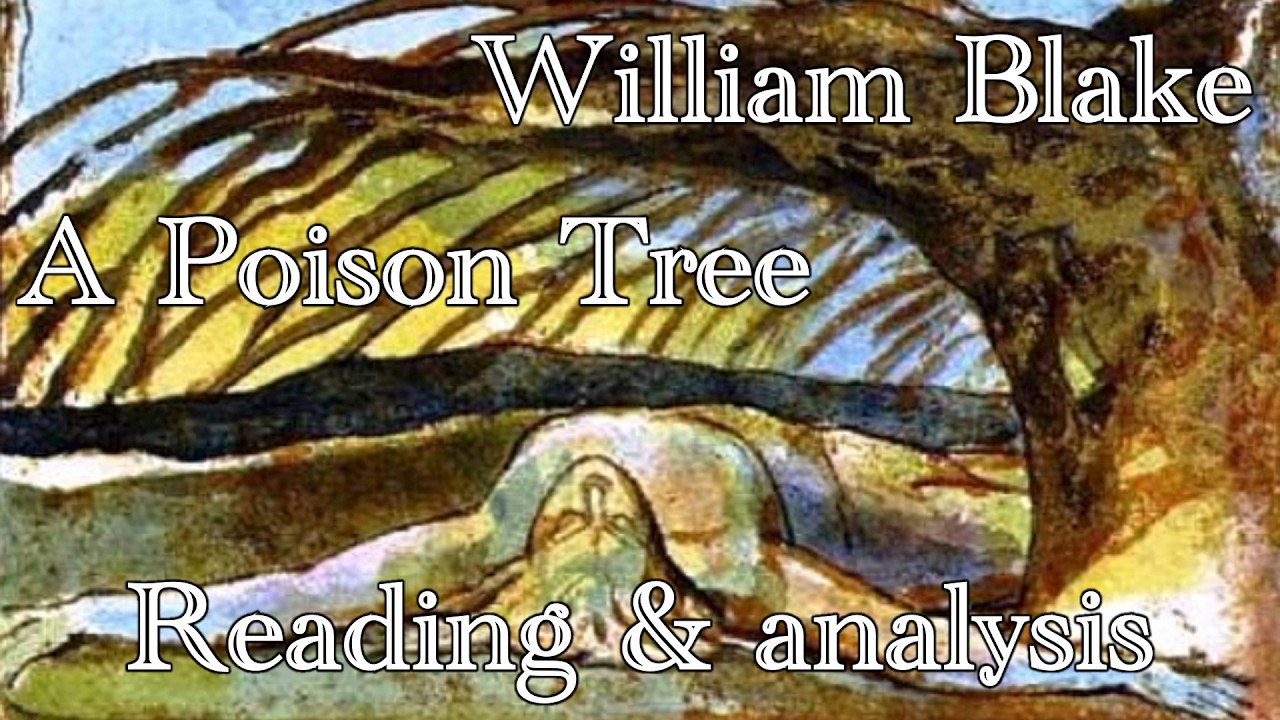
Reading and analysis of "A poison tree". Introduction to the poetry of William Blake. PART 3
A close reading of William Blake's "A Poison Tree" that challenges ...
A close reading of William Blake's "A Poison Tree" that challenges conventional interpretations. Most critics read this as a warning against repressing anger - but does Blake actually praise the ...narrator who nurtures wrath and defeats his foe? This analysis explores the poem's deliberate ambiguity.
Building on the previous video (on "Never seek to tell thy love") I examine how Blake again contrasts telling (which ends things) with acting (which makes things grow). But this time the question is more troubling: should we express anger through action rather than words? The analysis considers Blake's support for the French Revolution, his praise of "tigers of wrath" in "The Marriage of Heaven and Hell," and his sympathy for Satan in the Garden of Eden story.
What's covered:
Telling vs expressing, words vs action (continued from previous video)
The conventional reading vs Blake's actual philosophy
Historical context: The French Revolution and Blake's politics
The Garden of Eden imagery and Blake's sympathy for Satan
Why the poem's ambiguity matters - great literature asks questions, not answers
Part of a series on Blake's philosophy of contraries. Follows "Never seek to tell thy love."
Who it's for:
Perfect for students studying Blake's Songs of Experience, A-Level/university literature courses, or anyone interested in how poems can resist simple moral interpretations.
0:00 Intro
0:10 A poison tree: A reading
1:10 Telling brings things to an end
1:20 Action vs telling
1:34 Ending and perpetuating anger
1:44 Telling as a negative quality
1:56 Telling in "A poison tree"
2:08 The narrator is glad about defeating a foe
2:18 Expressing one's feelings
2:31 A warning against repressed anger?
2:48 Expressing through action, not words
3:25 Expressing both positive and negative feelings
3:51 The French Revolution
4:10 "The tigers of wrath"
4:26 Necessary enmity
4:40 The Garden of Eden
4:52 Blake is on the side of Satan
5:10 Expressing anger
5:35 Conclusion: Ambiguity
In this third video in the series on Blake's poetry I look at an ambiguity at the heart of Blake's short poem "A poison tree". Is he warning the reader against repressing one's anger by not talking about it, or is he encouraging the reader to express anger through action? Or is it perhaps a bit of both?
I recommend you to watch these videos in order and, in particular, to watch the preceding video ("Never seek to tell your love" https://www.youtube.com/watch?v=vQtMDbUsOwY) before watching this one.
The first video in the series can be found here: https://youtu.be/WXBXodU5qKI
© All rights reserved
=========================================
I was angry with my friend;
I told my wrath, my wrath did end.
I was angry with my foe:
I told it not, my wrath did grow.
And I waterd it in fears,
Night & morning with my tears:
And I sunned it with smiles,
And with soft deceitful wiles.
And it grew both day and night.
Till it bore an apple bright.
And my foe beheld it shine,
And he knew that it was mine.
And into my garden stole,
When the night had veil'd the pole;
In the morning glad I see;
My foe outstretched beneath the tree.
#romanticpoetry #blake #williamblake #poisontree #naturepoem #naturepoetry #nature #poetry #poetryloversShow More
Building on the previous video (on "Never seek to tell thy love") I examine how Blake again contrasts telling (which ends things) with acting (which makes things grow). But this time the question is more troubling: should we express anger through action rather than words? The analysis considers Blake's support for the French Revolution, his praise of "tigers of wrath" in "The Marriage of Heaven and Hell," and his sympathy for Satan in the Garden of Eden story.
What's covered:
Telling vs expressing, words vs action (continued from previous video)
The conventional reading vs Blake's actual philosophy
Historical context: The French Revolution and Blake's politics
The Garden of Eden imagery and Blake's sympathy for Satan
Why the poem's ambiguity matters - great literature asks questions, not answers
Part of a series on Blake's philosophy of contraries. Follows "Never seek to tell thy love."
Who it's for:
Perfect for students studying Blake's Songs of Experience, A-Level/university literature courses, or anyone interested in how poems can resist simple moral interpretations.
0:00 Intro
0:10 A poison tree: A reading
1:10 Telling brings things to an end
1:20 Action vs telling
1:34 Ending and perpetuating anger
1:44 Telling as a negative quality
1:56 Telling in "A poison tree"
2:08 The narrator is glad about defeating a foe
2:18 Expressing one's feelings
2:31 A warning against repressed anger?
2:48 Expressing through action, not words
3:25 Expressing both positive and negative feelings
3:51 The French Revolution
4:10 "The tigers of wrath"
4:26 Necessary enmity
4:40 The Garden of Eden
4:52 Blake is on the side of Satan
5:10 Expressing anger
5:35 Conclusion: Ambiguity
In this third video in the series on Blake's poetry I look at an ambiguity at the heart of Blake's short poem "A poison tree". Is he warning the reader against repressing one's anger by not talking about it, or is he encouraging the reader to express anger through action? Or is it perhaps a bit of both?
I recommend you to watch these videos in order and, in particular, to watch the preceding video ("Never seek to tell your love" https://www.youtube.com/watch?v=vQtMDbUsOwY) before watching this one.
The first video in the series can be found here: https://youtu.be/WXBXodU5qKI
© All rights reserved
=========================================
I was angry with my friend;
I told my wrath, my wrath did end.
I was angry with my foe:
I told it not, my wrath did grow.
And I waterd it in fears,
Night & morning with my tears:
And I sunned it with smiles,
And with soft deceitful wiles.
And it grew both day and night.
Till it bore an apple bright.
And my foe beheld it shine,
And he knew that it was mine.
And into my garden stole,
When the night had veil'd the pole;
In the morning glad I see;
My foe outstretched beneath the tree.
#romanticpoetry #blake #williamblake #poisontree #naturepoem #naturepoetry #nature #poetry #poetryloversShow More

Now Playing
"Vala, or The Four Zoas": A reading. An introduction to the poetry of William Blake. PART 4
Click here for my William Blake playlist: ...
Click here for my William Blake playlist: https://www.youtube.com/watch?v=WXBXodU5qKI&list=PLzVb6yL_jY69kJRNsa_3wE54b8Tf8jp-b
What is the price of Experience? Do men buy it for a song?
Or wisdom for a dance in the street? No it is ...bought with the price
Of all that a man hath, his house his wife his children.
Wisdom is sold in the desolate market where none come to buy
And in the withered field where the farmer plows for bread in vain.
It is an easy thing to triumph in the summers sun
And in the vintage & to sing on the waggon loaded with corn.
It is an easy thing to talk of patience to the afflicted,
To speak the laws of prudence to the houseless wanderer,
To listen to the hungry ravens cry in wintry season,
When the red blood is filled with wine & with the marrow of lambs.
It is an easy thing to laugh at wrathful elements,
To hear the dog howl at the wintry door, the ox in the slaughter house moan;
To see a god on every wind & a blessing on every blast
To hear sounds of love in the thunder storm that destroys our enemy's house;
To rejoice in the blight that covers his field, & the sickness that cuts off his children
While our olive & vine sing & laugh round our door & our children bring fruits & flowers.
Then the groan & the dolor are quite forgotten & the slave grinding at the mill
10And the captive in chains & the poor in the prison, & the soldier in the field,
When the shatterd bone hath laid him groaning among the happier dead.
It is an easy thing to rejoice in the tents of prosperity
Thus could I sing & thus rejoice, but it is not so with me.
© All rights reserved
#romanticpoetry #blake #williamblake #innocence #experience #naturepoem #naturepoetry #nature #poetry #poetryloversShow More
What is the price of Experience? Do men buy it for a song?
Or wisdom for a dance in the street? No it is ...bought with the price
Of all that a man hath, his house his wife his children.
Wisdom is sold in the desolate market where none come to buy
And in the withered field where the farmer plows for bread in vain.
It is an easy thing to triumph in the summers sun
And in the vintage & to sing on the waggon loaded with corn.
It is an easy thing to talk of patience to the afflicted,
To speak the laws of prudence to the houseless wanderer,
To listen to the hungry ravens cry in wintry season,
When the red blood is filled with wine & with the marrow of lambs.
It is an easy thing to laugh at wrathful elements,
To hear the dog howl at the wintry door, the ox in the slaughter house moan;
To see a god on every wind & a blessing on every blast
To hear sounds of love in the thunder storm that destroys our enemy's house;
To rejoice in the blight that covers his field, & the sickness that cuts off his children
While our olive & vine sing & laugh round our door & our children bring fruits & flowers.
Then the groan & the dolor are quite forgotten & the slave grinding at the mill
10And the captive in chains & the poor in the prison, & the soldier in the field,
When the shatterd bone hath laid him groaning among the happier dead.
It is an easy thing to rejoice in the tents of prosperity
Thus could I sing & thus rejoice, but it is not so with me.
© All rights reserved
#romanticpoetry #blake #williamblake #innocence #experience #naturepoem #naturepoetry #nature #poetry #poetryloversShow More

Now Playing
"The Human Abstract": A reading. An introduction to the poetry of William Blake. PART 5
Blake's "The Human Abstract" shows the more cynical, "experienced" ...
Blake's "The Human Abstract" shows the more cynical, "experienced" side of William Blake. Pity and mercy, he tells us, are not necessarily purely positive; they may serve to gratify the ...supposedly virtuous, rather than to help the suffering.
Click here to follow the Blake playlist: https://www.youtube.com/watch?v=WXBXodU5qKI&list=PLzVb6yL_jY69kJRNsa_3wE54b8Tf8jp-b
© All rights reserved
Pity would be no more
If we did not make somebody Poor;
And Mercy no more could be
If all were as happy as we.
And mutual fear brings peace,
Till the selfish loves increase:
Then Cruelty knits a snare,
And spreads his baits with care.
He sits down with holy fears,
And waters the grounds with tears;
Then Humility takes its root
Underneath his foot.
Soon spreads the dismal shade
Of Mystery over his head;
And the Caterpillar and Fly
Feed on the Mystery.
And it bears the fruit of Deceit,
Ruddy and sweet to eat;
And the Raven his nest has made
In its thickest shade.
The Gods of the earth and sea
Sought through Nature to find this Tree;
But their search was all in vain:
There grows one in the Human Brain.Show More
Click here to follow the Blake playlist: https://www.youtube.com/watch?v=WXBXodU5qKI&list=PLzVb6yL_jY69kJRNsa_3wE54b8Tf8jp-b
© All rights reserved
Pity would be no more
If we did not make somebody Poor;
And Mercy no more could be
If all were as happy as we.
And mutual fear brings peace,
Till the selfish loves increase:
Then Cruelty knits a snare,
And spreads his baits with care.
He sits down with holy fears,
And waters the grounds with tears;
Then Humility takes its root
Underneath his foot.
Soon spreads the dismal shade
Of Mystery over his head;
And the Caterpillar and Fly
Feed on the Mystery.
And it bears the fruit of Deceit,
Ruddy and sweet to eat;
And the Raven his nest has made
In its thickest shade.
The Gods of the earth and sea
Sought through Nature to find this Tree;
But their search was all in vain:
There grows one in the Human Brain.Show More

Now Playing
William Blake, "The Tiger". Read by Ano sensei
Click here for my William Blake playlist: ...
Click here for my William Blake playlist: https://www.youtube.com/watch?v=WXBXodU5qKI&list=PLzVb6yL_jY69kJRNsa_3wE54b8Tf8jp-b
© All rights reserved
Tyger Tyger, burning bright,
In the forests of the night;
What immortal hand or eye,
Could frame thy fearful symmetry?
In ...what distant deeps or skies.
Burnt the fire of thine eyes?
On what wings dare he aspire?
What the hand, dare seize the fire?
And what shoulder, & what art,
Could twist the sinews of thy heart?
And when thy heart began to beat,
What dread hand? & what dread feet?
What the hammer? what the chain,
In what furnace was thy brain?
What the anvil? what dread grasp,
Dare its deadly terrors clasp!
When the stars threw down their spears
And water'd heaven with their tears:
Did he smile his work to see?
Did he who made the Lamb make thee?
Tyger Tyger burning bright,
In the forests of the night:
What immortal hand or eye,
Dare frame thy fearful symmetry?
#romanticpoetry #blake #naturepoem #naturepoetry #nature #poetry #poetrylovers #williamblake #blaketigerShow More
© All rights reserved
Tyger Tyger, burning bright,
In the forests of the night;
What immortal hand or eye,
Could frame thy fearful symmetry?
In ...what distant deeps or skies.
Burnt the fire of thine eyes?
On what wings dare he aspire?
What the hand, dare seize the fire?
And what shoulder, & what art,
Could twist the sinews of thy heart?
And when thy heart began to beat,
What dread hand? & what dread feet?
What the hammer? what the chain,
In what furnace was thy brain?
What the anvil? what dread grasp,
Dare its deadly terrors clasp!
When the stars threw down their spears
And water'd heaven with their tears:
Did he smile his work to see?
Did he who made the Lamb make thee?
Tyger Tyger burning bright,
In the forests of the night:
What immortal hand or eye,
Dare frame thy fearful symmetry?
#romanticpoetry #blake #naturepoem #naturepoetry #nature #poetry #poetrylovers #williamblake #blaketigerShow More
