
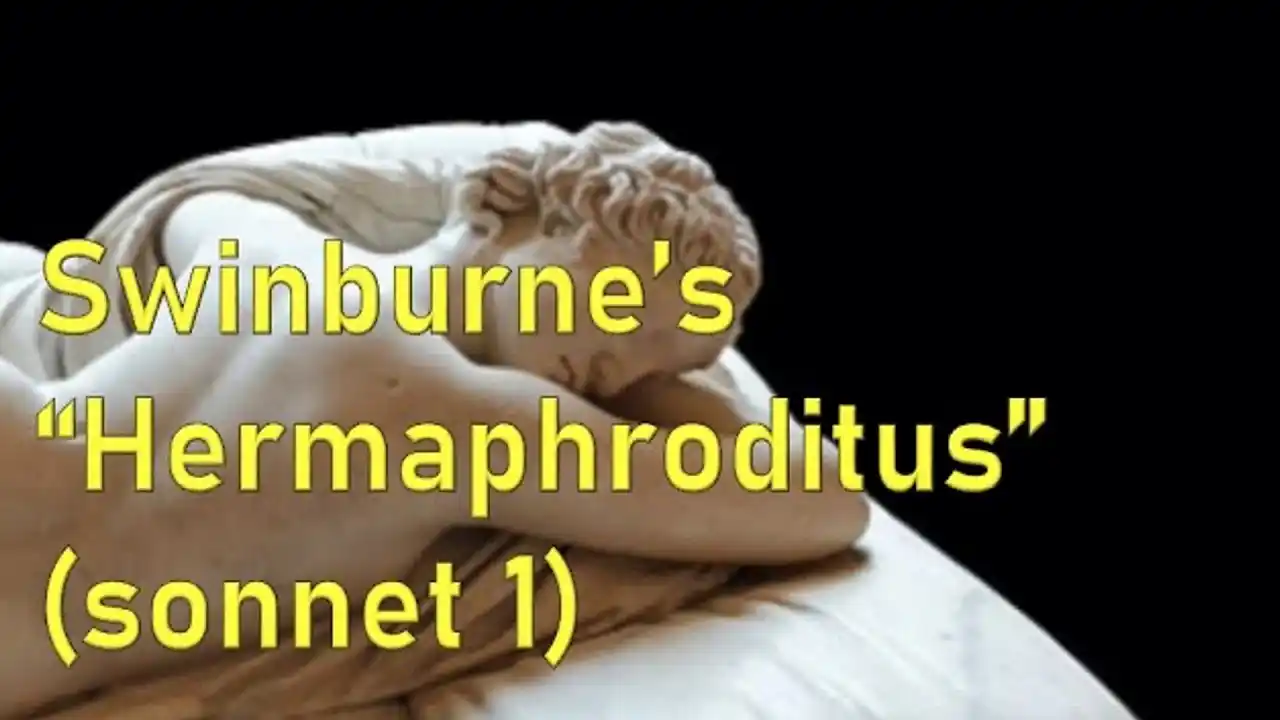
Author: Ano Sensei
Format: Video
Structure: Iambic pentameter, Sonnet
Related content:
Victorian erotic poetry. Algernon Charles Swinburne: "Hermaphroditus", Sonnet 1. Reading & analysis
Written at the Louvre in March 1863 and published in Poems and Ballads (1866), this poem was condemned as "salacious and obscene" by Victorian critics. The analysis explores how Swinburne navigated taboo themes of androgynous desire, transgressive love, and suffering through intentionally difficult language. We examine the "two loves" (heterosexual and homosexual desire), the echo of Shakespeare's Sonnet 144, and why Swinburne replaces comfort with unending desire.
What's covered:
The statue at the Louvre and its Renaissance bed by Bernini
Victorian moral censorship and why Swinburne wrote obscurely
"Think dirty and you won't go far wrong" - decoding taboo themes
The two kinds of love: desire for Hermaphroditus as woman and as man
Desire and despair: love that can never be consummated
Swinburne's philosophy: love bound with suffering (Dolores, Anactoria, Fragoletta)
Who it's for:
Advanced university-level analysis for students studying Victorian poetry, transgressive literature, or Swinburne's work. Not recommended for beginners.
0:00 Introduction
0:18 Hermaphroditus and Salmacis
0:38 Statue of "Hermaphroditus Sleeping"
1:08 Lines 1-4 (reading)
1:31 Lines 1-4 (analysis)
2:08 Victorian morality
2:53 Swinburne and taboo
3:28 Lines 5-14 (reading)
4:07 Lines 5-14 (analysis)
4:25 Think dirty and you won't go far wrong!
4:35 Heterosexual and homosexual love
5:43 Desire and despair
6:18 Love and suffering in Swinburne
7:15 "Two loves" in Shakespeare
7:55 Contrasted with Swinburne
When the first series of Swinburne's "Poems and Ballads" was published in 1866 the Victorian public was scandalized. One reviewer condemned it as "the spurious passion of a putrescent imagination", adding that the only good thing about it was that most people wouldn't understand it! So what was the fuss all about? Stay tuned and find out!
This video explains Swinburne's 'Hermaphroditus', focusing on its background and the mythological story from Ovid's Metamorphoses. Understanding this poem requires knowing its historical and literary context. I explore how this piece of literature draws heavily from Greek Mythology and ancient history, making the study of its sources essential.
© All rights reserved
=======================================
LIFT UP thy lips, turn round, look back for love,
Blind love that comes by night and casts out rest;
Of all things tired thy lips look weariest,
Save the long smile that they are wearied of.
Ah sweet, albeit no love be sweet enough,
Choose of two loves and cleave unto the best;
Two loves at either blossom of thy breast
Strive until one be under and one above.
Their breath is fire upon the amorous air,
Fire in thine eyes and where thy lips suspire:
And whosoever hath seen thee, being so fair,
Two things turn all his life and blood to fire;
A strong desire begot on great despair,
A great despair cast out by strong desire.Show More