
Author: Ano Sensei
Format: Video
Structure: Rhyming couplets, Trochaic tetrameter
Related content:
- • Prosody: A Practical Guide — with examples from The Rime of the Ancient Mariner (Study Guide)
- • Who Were Shakespeare’s Friends? The Stratford Circle (Video)
- • Shakespeare’s Stratford Friends: A Study Guide (Digital Booklet)
- • Shakespeare, Hamlet: “To Be or Not to Be” – Revenge, Suicide, and the Ethics of Action (Study Guide)
- • Shakespeare’s Stratford Friends: His Social Circle in His Home Town (Video Playlist)
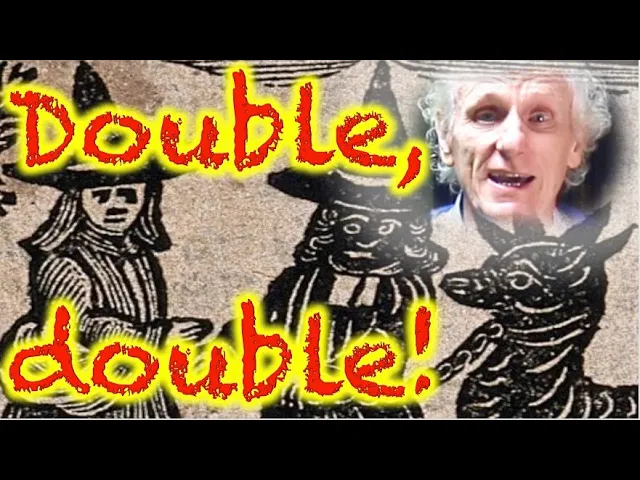
Shakespeare Macbeth - The Witches' Chant (Metre and Rhythm). Reading and analysis
This tutorial demonstrates hands-on meter analysis: clap where it feels natural, count the strong syllables, divide into feet. The witches' chant uses trochaic tetrameter (strong/weak pattern, four times) with catalectic lines (missing the final weak syllable). But the crucial lesson is that describing technique without explaining its effect is like describing a knife and fork without mentioning eating - technically accurate but fundamentally incomplete.
What's covered:
How to scan meter using the clapping method
Trochaic tetrameter explained (strong/weak, four feet)
Catalectic lines (incomplete final foot)
Elision and variation (line 9: "powerful" vs "pow'rful")
Why it matters: How rhythm transforms a boring ingredient list into a powerful magical chant
Who it's for:
Perfect for GCSE/A-Level students learning to analyze Shakespeare, anyone studying poetic meter and scansion, or readers who want practical tools for understanding rhythm in poetry.
© All rights reservedShow More
4 Comments
🥶🥶
Ha ha!
@anosensei Im a physics Student but nowadays im getting interested in English. Though it’s not my first language.
@bolshevikussr That’s great! And it is especially wonderful that you take an interest in its literature.