
Author: Ano Sensei
Format: Video
Related content:
- • Spotlight on English: Advanced English Grammar (Video Playlist)
📚 Part of a series: English in Context: Basic English Grammar
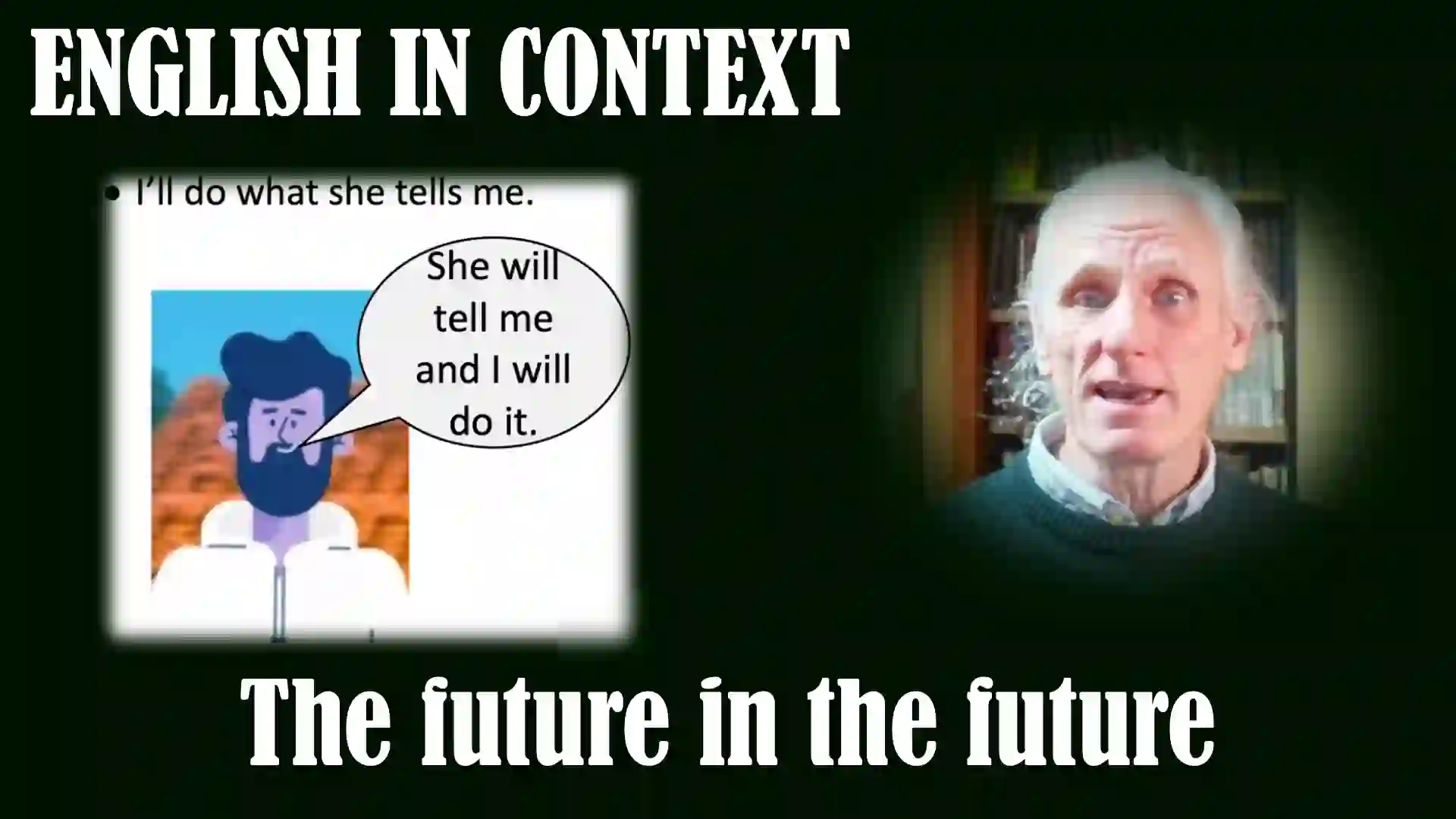
🧑🎓I'll do what she tells me /I'll tell you what she'll do: the future future! | ENGLISH IN CONTEXT👀
In this video I explain the concept of "the future in the future" — what happens when a sentence about the future also contains a reference to something that will happen even further ahead. It's a distinction that puzzles many learners, and one that most textbooks handle poorly if at all.
The key difference: in "I'll do what she tells me", "will" puts the whole situation into the future — her instructions will come as present-tense commands ("Wash the car!", "Phone your mother!"). But in "I'll tell you what she'll do", the first "will" places the speaker in the future, and the second "will" pushes what she does to a point even further ahead — the future in the future.
For a more detailed explanation covering a wider range of dependent clauses with a future meaning, see the follow-up video: https://youtu.be/BHOEZxp2a1o?feature=shared
What this video covers:
Why "will" appears once in "I'll do what she tells me" but twice in "I'll tell you what she'll do"
Why "I will do what she will tell me" is incorrect
The concept of "the future in the future" in English grammar
How "will" behaves differently in different types of dependent clause
I'm John R. Yamamoto-Wilson — formerly Professor of English Literature at Sophia University, Tokyo, with a PhD from the University of Cambridge. These videos are aimed at intermediate learners of English, and at the teachers who work with them. 📌 Part of the English in Context series — intermediate grammar points that textbooks often explain poorly or get wrong. Click here for the complete series: https://www.youtube.com/playlist?list=PLzVb6yL_jY6_sKngAN_gYB8w-KC20AGP4
© All rights reservedShow More