
Author: Ano Sensei
Format: Video
Subject Matter: any, context, determiners, negatives, positive statements, questions, some, specific vs non-specific
Related content:
- • English in Context: Basic English Grammar (Video Playlist)
- • Spotlight on English: Advanced English Grammar (Video Playlist)
📚 Part of a series: English in Context: Basic English Grammar
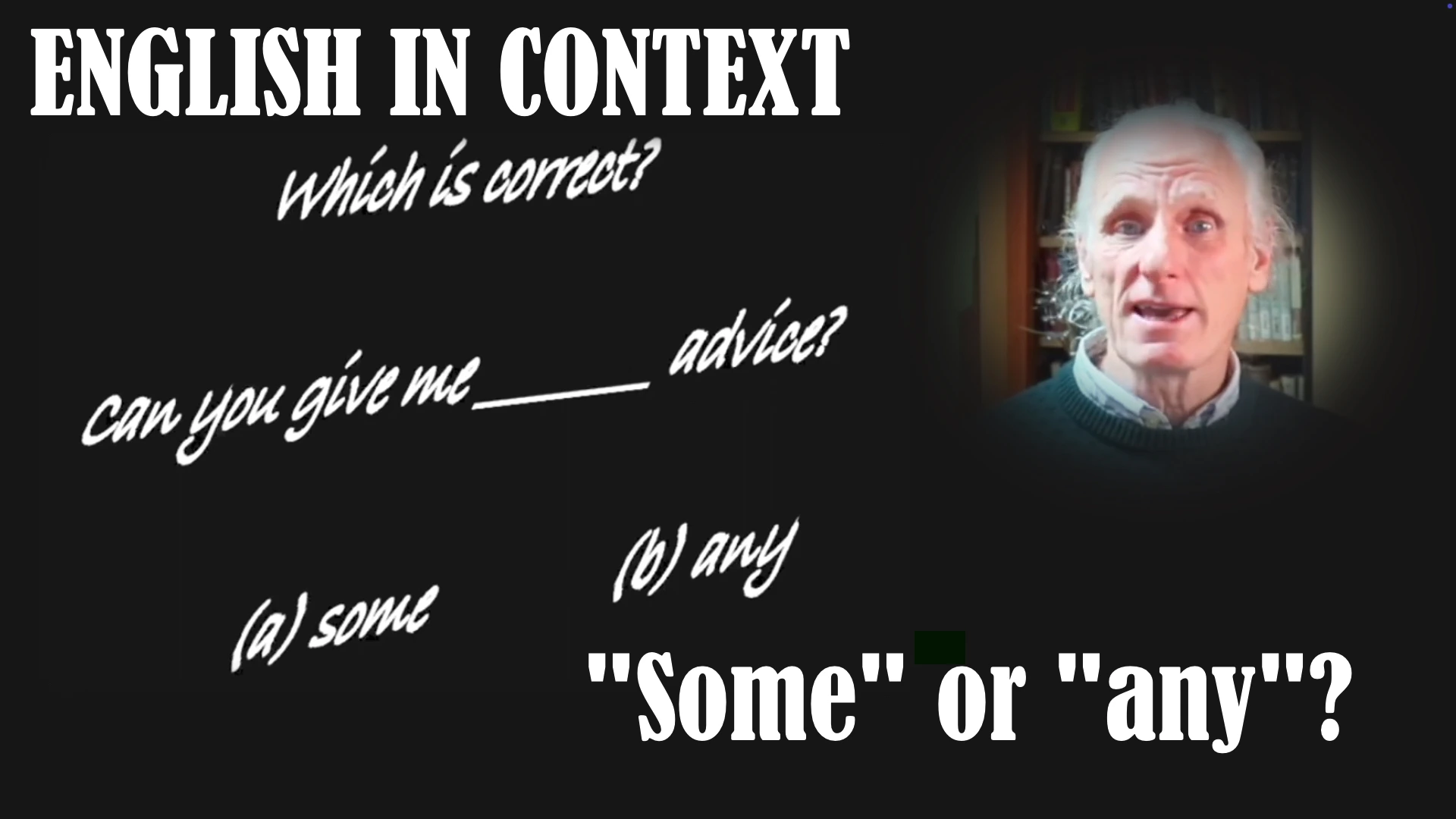
🧑🎓 "Some" or "any"? The rule your textbook gets wrong 20% of the time | ENGLISH IN CONTEXT 👀
Consider: "Could I have some coffee, please?" — a question, but "some" is required. "Any coffee will be fine" — a positive statement, but "any" is correct. The simple rule fails both. A better approach is to think about what "some" and "any" actually mean: we use "some" when we have a particular thing in mind, and "any" when it doesn't matter which one. Once you understand that distinction, the apparent exceptions stop being exceptions.
For a more detailed explanation, see the follow-up video: https://youtu.be/2aHoPOa0XgI
What this video covers:
The standard "some/any" rule and why it works most but not all of the time
Examples where the rule breaks down
A better way to think about "some" and "any": specific vs. non-specific
Why context — and how the speaker thinks about the situation — determines the choice
I'm John R. Yamamoto-Wilson — formerly Professor of English Literature at Sophia University, Tokyo, with a PhD from the University of Cambridge. These videos are aimed at intermediate learners of English, and at the teachers who work with them. 📌 Part of the English in Context series — intermediate grammar points that textbooks often explain poorly or get wrong. Click here for the complete series: https://www.youtube.com/playlist?list=PLzVb6yL_jY6_sKngAN_gYB8w-KC20AGP4
© All rights reservedShow More